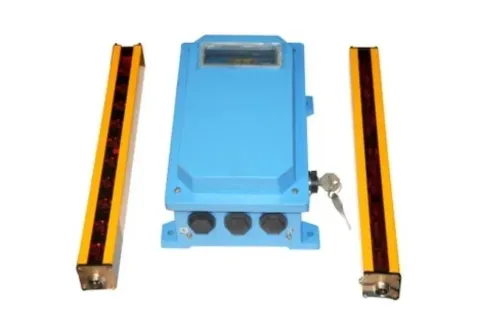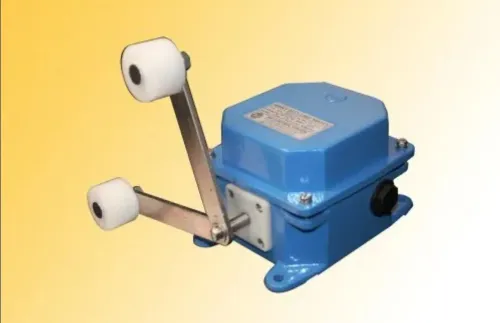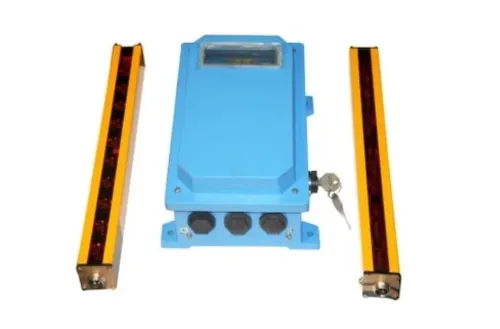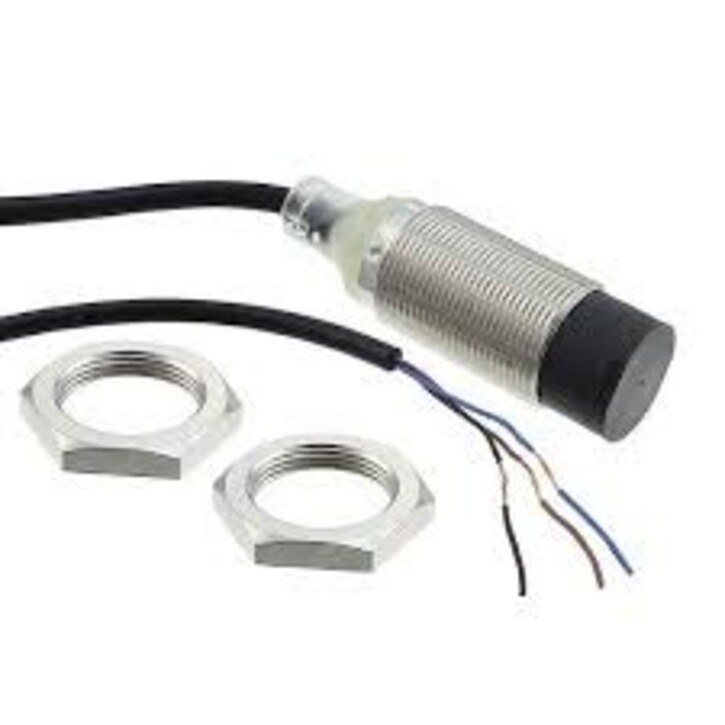
Choose a capacitive proximity switch when you need to know whether material is present near a sensing face; choose an electronic zero speed switch when you need to confirm that a shaft, pulley or belt has stopped or fallen below a set speed. The decision depends on the physical event you need to detect, the installation environment, the control signal and the failure response—not on which device has the more industrial-sounding name.
Key takeaways
- Use a capacitive switch for material presence, not shaft or belt speed.
- Check the actual product, moisture, target distance and mounting before selecting a sensor.
- Use a zero speed switch when conveyor motion feedback matters.
- Ask Mumbai suppliers for compatibility details, wiring support and commissioning evidence.
First identify whether you are detecting material or motion
A capacitive proximity switch detects material near its sensing face; an electronic zero speed switch detects whether a rotating shaft, pulley, sprocket or belt has stopped or fallen below a set speed. They are not interchangeable.
| Device | Detects | Choose it when |
|---|---|---|
| Capacitive proximity switch | Conductive or non-metallic material, level or presence | You need to detect grain, powder, plastic, glass, liquid or product in a chute, bin or container |
| Electronic zero speed switch | Pulses from a rotating target and their frequency or period | You need conveyor motion feedback, stopped-belt detection or under-speed monitoring |
A capacitive sensor responds to capacitance, so moisture, dielectric constant, bulk density, foam, dust buildup and a metal mounting bracket can shift its switching point. Commission it with the real Mumbai-plant material, container and mounting arrangement rather than relying on the printed nominal sensing distance.
An electronic zero speed switch needs a defined motion marker and a configured threshold. It is a pulse-monitoring device, not a proximity sensor with a new name. Confirm that its output logic matches the PLC input, relay circuit or feeder controller.
For hazardous dust or gas areas, IP rating alone proves nothing. Match the equipment marking, protection concept, permitted zone, gas or dust group and temperature class under the applicable IEC 60079 requirements. Neither device automatically replaces an emergency-stop, guard-interlock or safety-rated stopping circuit.
Select and install a capacitive switch around the real product
Choose a capacitive proximity switch only after testing the actual product: grain, powder, plastic, glass and liquid produce different dielectric responses. The printed sensing distance is a reference, not a guaranteed operating point. Moisture, bulk density, target size and the sensitivity adjustment move the switching threshold.
Mounting choice changes repeatability:
| Option | Installation | Risk if misapplied |
|---|---|---|
| Flush-mountable | Active face level with surrounding metal | A metal bracket can still alter the field if it crowds the face |
| Non-flush | Leave the manufacturer’s clear zone around the face | Nearby metal can cause permanent switching or unstable operation |
| Through a non-metal wall | Adjust with the actual wall, product and buildup present | Wall thickness, condensation and residue become part of the dielectric system |
Commission a capacitive proximity sensor in Mumbai using the real container or chute, not a dry sample on a workbench. Mount it in its final position, then:
- Run empty and full conditions repeatedly.
- Set sensitivity so the full product switches reliably without residue triggering it.
- Check the result at high humidity, after dust buildup and with normal product density.
- Add a time delay when foam, turbulence or vibration causes brief pulses.
- Keep the sensing face clear of brackets and verify the datasheet’s flush or non-flush requirement.
If the product level changes slowly, confirm the sensor remains stable through the whole range. In hazardous dust or gas areas, match the equipment’s IEC 60079 marking, zone, gas or dust group and temperature class; an IP rating alone is not approval.
Know when capacitive detection is the wrong level or motion solution
A capacitive proximity switch is the wrong choice when you need confirmed shaft motion, belt movement or a protective stop signal rather than material presence. It detects capacitance from grain, powder, plastic, glass or liquid, so moisture, density and buildup can change the result.
- Choose an electronic zero speed switch for a dusty conveyor, rotating shaft or pulley. A capacitive proximity sensor can false-trigger as product accumulates, while a nonmetallic target can produce weak, inconsistent pulses. Use a defined bolt, vane or toothed target, and test the sensor, gap and target at the lowest and highest speeds.
- Reject the sensor when foam, condensation, changing bulk density or a metal mounting bracket shifts its switching point. The printed sensing distance is not a universal operating distance; test the real Mumbai-plant material in its actual container, chute or hopper.
- Do not treat IP65 as washdown or chemical protection. IEC 60529 defines IP65 as dust-protected and protected against water jets, not immersion, corrosive chemicals or high-pressure hot washing. Select protection for the actual humidity, dust and cleaning method.
- In hazardous dust or gas areas, ordinary IP protection is insufficient. Match the equipment marking, protection concept, permitted zone, gas or dust group and temperature class to the area classification under IEC 60079.
- Before buying a capacitive proximity sensor in Mumbai, demand the exact part-number datasheet, output logic, wiring diagram and commissioning limits. “Capacitive” or “zero speed” alone does not prove compatibility with your PLC, relay circuit or feeder controller.
Configure an electronic zero speed switch for dependable conveyor feedback
Specify the motion marker before you specify the switch. An electronic zero speed switch counts pulses from a shaft disc, sprocket, pulley or other rotating target; it does not confirm that every conveyor component is moving.
Mount the target on a mechanically representative shaft, because a broken coupling, stripped key or slipping belt can produce a misleading result.
1. Record the target geometry: number of pulses per revolution, target diameter, sensor gap, shaft location and whether one pulse or several pulses occur per revolution. The wrong pulse count changes the calculated speed and can cause nuisance trips or delayed protection.
2. Set the operating limits: minimum normal speed, under-speed or zero-speed threshold, allowable stopping delay, start-up inhibit time and restart behavior. Set the inhibit long enough for motor acceleration, but not so long that a stopped conveyor continues unprotected.
3. Define every fault state before wiring: relay position on power failure, response to lost sensor pulses, response to sensor or cable failure, manual-reset requirement and automatic restart policy. Ask an electronic zero speed switch supplier for these values in the datasheet, not only a nominal RPM range.
Test the switch with the conveyor empty and loaded. Stop the drive, interrupt the sensor signal, and remove control power to confirm that each fault produces the intended output.
A zero speed switch is not an emergency-stop device; your risk assessment must decide whether its output may stop the machine or must feed a separate safety-rated circuit.
Compare Mumbai suppliers by compatibility and commissioning evidence
Ask a capacitive proximity sensor or electronic zero speed switch in Mumbai supplier to prove compatibility before comparing price. The quotation must name the exact part number, not just “capacitive” or “zero speed”.
| Option | Request before purchase | Failure prevented |
|---|---|---|
| Capacitive proximity sensor | Datasheet, PNP/NPN output, NO/NC logic, supply range, flush or non-flush construction, adjustable sensing distance, and the test target used for that distance | A sensor that switches correctly in a catalogue but not on your material, chute or PLC input |
| Electronic zero speed switch | Pulse-input specification, target arrangement, pulse-per-revolution limit, under-speed threshold, start-up delay range, relay contact rating, and relay state during power failure or sensor-signal loss | A conveyor that trips during every start, or fails to report a stopped shaft |
| Either device | Wiring diagram, IP rating, operating-temperature range, enclosure details, replacement lead time and commissioning procedure | Rework caused by the wrong cable, enclosure or maintenance expectation |
For a hazardous dust or gas area, demand the equipment marking, protection concept, permitted zone, gas or dust group and temperature class under the applicable IEC 60079 requirements. IP65 alone does not establish suitability.
Require a site trial using the real Mumbai-plant material, container or rotating target. Ask the electronic zero speed switch supplier to record the start delay and stop threshold, and ask the capacitive proximity sensor in Mumbai supplier to record the final sensitivity setting.
SAI CONTROL SYSTEM should be evaluated against the same evidence, not against catalogue wording.
Related product
 | Proximity Sensor Sai Control Systems offers a high-performance Capacitive Proximity Sensor designed to detect a wide range of materials including plastic, glass,... View product → |
Frequently asked questions
What is the difference between a capacitive proximity switch and an electronic zero speed switch?
A capacitive proximity switch detects material near its sensing face. An electronic zero speed switch monitors a rotating shaft, pulley, sprocket or belt and signals when motion stops or drops below a set speed.
When is a capacitive proximity sensor the wrong choice?
Choose another solution when you need reliable conveyor motion feedback, shaft-speed measurement or zero-speed protection rather than material presence detection.
How should you compare an electronic zero speed switch supplier in Mumbai?
Check compatibility with your shaft, pulley or belt arrangement, electrical interface, speed range, enclosure and installation conditions. Ask for wiring guidance, setup support and evidence of completed commissioning.