Uneven output can come from a changing vibration setting, but it can also begin with hopper bridging, material variation, loose mounting, or a downstream machine that requests feed intermittently. By the end, you will be able to separate those causes, compare manual adjustment with SDVC31-L control under the same test conditions, and choose a practical setup for your line.
Key takeaways
- Separate hopper-level drift from downstream demand changes before adjusting amplitude.
- Check springs, mounting, buildup, and material before blaming the controller.
- Use logged setpoints and output counts to compare manual and automatic control.
- Commission the uneven-feed solution against the line’s minimum and maximum demand.
Identify the Type of Uneven Flow Before Changing the Setting
A changing feeder setting is justified when a mechanically sound feeder changes output with production demand or material level: feed rate drifts as the hopper empties, the downstream machine requests a new speed, or a clean bowl feeds steadily at one amplitude but not another.
Record the controller setting and measured feed rate before adjusting anything.
| Symptom | More likely explanation | Check before changing amplitude |
|---|---|---|
| Feed rate rises or falls with hopper level | Changing head pressure or material presentation | Check bridging, refill pattern, moisture, and particle-size variation |
| Surging discharge or intermittent bowl loading | Poor loading, tooling restriction, or downstream demand | Inspect the inlet, track, chute, and machine request signal |
| Empty cycles at constant demand | Mechanical, isolation, wiring, or controller fault | Check bolts, springs, level, clearances, mounts, and connections |
| Output changes after amplitude adjustment and remains repeatable | Setting-related response | Repeat the test at the same material level |
| Uneven output with bowl contact, buildup, or loose parts | Mechanical fault | Remove foreign material and verify the bowl touches nothing |
The practical question in sdvc31 l vs manual feeder adjustment for uneven flow is whether the setting is correcting a measured flow response or hiding a fault. A poorly tensioned spring pack, damaged leaf spring, incorrect counterweight, worn rubber mount, or material trapped beneath the bowl will not be reliably cured by either method.
Establish a clean baseline, then vary one factor at a time: material level, sensor position, amplitude, and downstream demand. Repeated operator knob changes create operator-dependent results and can mask the cause of starvation or overfeeding.
How Manual Adjustment and SDVC31-L Behave During a Changing Shift
A manual knob reacts only after someone notices the flow change; an SDVC31-L can respond to a control signal or sensor input without waiting for an operator. That difference matters when hopper level, material batch, or downstream demand changes several times during a shift.
| Dimension | Manual adjustment | SDVC31-L |
|---|---|---|
| Response time | Delayed by detection, access, and operator correction | Adjusts the commanded vibration automatically when the input and setup are correct |
| Operator effort | Requires repeated observation and potentiometer changes | Reduces routine intervention and shift-to-shift chasing |
| Repeatability | Depends on who sets the knob and where it is left | Stores or applies a defined operating setting more consistently |
| Downtime | Corrections can require pauses, trial runs, or rejected output | Can limit interruptions, though sensor or mechanical faults still stop stable control |
| Material waste | Overfeeding during correction produces spills, rejects, or excess stock | Tighter response can reduce overfeed while maintaining demand |
These advantages do not repair a loose bowl, damaged spring, worn rubber mount, or blocked hopper. A faulty sensor position or intermittent cable also creates false confidence: the controller appears active while feed remains unstable. Fix the mechanism and verify the signal before judging the control method.
The strongest manual feeder adjustment problems occur when operators repeatedly turn amplitude to compensate for changing conditions. In a vibrator feeder controller comparison, establish a clean baseline, record setting and measured rate, then vary one factor at a time. Changing material level, sensor position, amplitude, and demand together hides the real difference.
Diagnose and Tune the Feeder Without Chasing the Wrong Cause
Start by separating an unstable vibration signal from an unstable material process: run the feeder empty, then repeat with a measured, controlled load. If empty operation is steady but loaded flow surges, investigate loading, material behaviour, or downstream demand before changing amplitude.
1. Establish a baseline with a clean, level feeder. Record the amplitude setting and measured feed rate at a stable material level.
2. Run empty and change amplitude in small increments. A weak, erratic, or mechanically noisy vibration points to the feeder or drive, not the product.
3. Add a controlled load and vary material level separately. Bridging, rat-holing, adhesion, intermittent bowl loading, or upstream surges identify material presentation problems.
4. Inspect tooling before blaming the controller. Tighten mounting bolts, confirm the bowl or tray clears surrounding structures, check spring condition and installation, and remove buildup or trapped foreign material.
5. Check isolation: verify the feeder is level, rubber mounts are intact, and nearby equipment is not transmitting vibration. A moving base changes feed rate even when amplitude is constant.
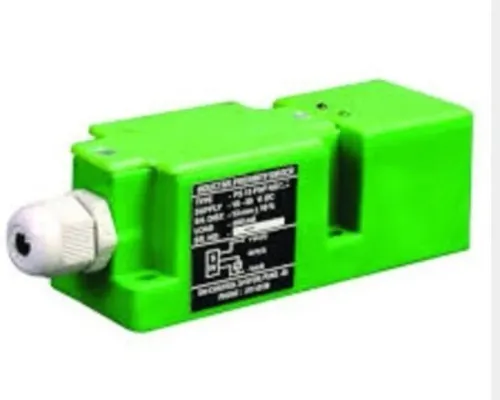
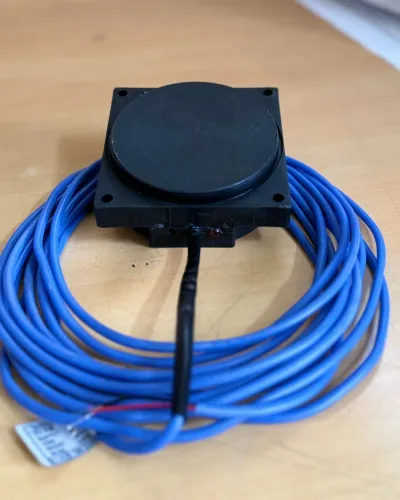
6. Check the feedback sensor and wiring. Confirm correct orientation and mounting, inspect for vibration damage, and flex-test the cable for intermittent connections.
7. Assess the controller last. A loose sensor or ineffective mechanical feedback path can make common SDVC31-L feeder control problems look like normal adjustment. Change one factor at a time, then compare feed rate against the baseline.
Repeatedly turning a manual amplitude control can hide the cause and create shift-to-shift settings. The SDVC31-L can regulate a sound feeder, but it cannot correct a damaged spring, poor isolation, inconsistent loading, or downstream back-pressure.
Compare Control Options With a Repeatable Production Test
Compare the options under identical production conditions, not by turning knobs until the discharge looks acceptable. This is the practical test for sdvc31 l vs manual feeder adjustment for uneven flow.
| Option | Control method | Response and effort | Repeatability, downtime, waste |
|---|---|---|---|
| Manual regulator | Operator changes amplitude | Immediate only when someone notices drift; high effort | Low across shifts; adjustment interrupts production and can cause overfeeding |
| SDVC31-L | Controller changes vibration, with compatible feedback where configured | Faster correction with less intervention | Higher repeatability; confirm sensor mounting, wiring, variant, and feedback settings |
| Timer control | Runs fixed on/off intervals | Cannot recognise level, load, or demand changes | Repeatable timing but unstable mass flow; surging and empty cycles remain possible |
| Closed-loop control | Uses measured flow, weight, level, or demand feedback | Best correction when the sensor and actuator are tuned | Highest potential consistency; commissioning and maintenance are more demanding |
Run a vibrator feeder controller comparison with a clean, mechanically sound feeder. Record the setting and measured feed rate, then change one factor at a time:
- Material level in the hopper
- Sensor position and orientation
- Controller amplitude
- Downstream demand
Check mounting bolts, springs, bowl clearance, level, rubber mounts, counterweight, and trapped material before judging the controller. A loose sensor or intermittent cable can make feedback appear active while flow remains unstable.
Manual adjustment is still the better choice for one product, a constant upstream head, a fixed rate, and an attentive operator. Choose it when the cost of commissioning automation exceeds the loss from occasional adjustment.
Specify and Commission an Uneven-Feed Solution in Pune
Approve an uneven material feed solution in Pune only after the controller, feeder, sensor, supply, and service plan pass checks at the actual machine. Nominal 230-V service is not enough evidence.
1. Match the exact SDVC31-L variant to the electromagnetic feeder, coil rating, sensor type, feedback connection, and control signal. Reject the installation if the manual does not confirm compatibility.
2. Measure supply voltage at the controller during startup and production. Record voltage fluctuation, earthing continuity, cable routing, loose terminals, and nearby loads that create electrical disturbance.
3. Inspect the feeder before tuning: tighten mounting bolts, verify the bowl or tray clears surrounding structures, check intact springs, level the unit, and remove buildup or trapped foreign material. Confirm the hopper, tooling, isolation mounts, and downstream machine do not impose back-pressure.
4. Establish a baseline with a clean feeder. Record material level, sensor position, controller setting, feed rate, empty cycles, and recovery after a demand change; then vary one factor at a time.
5. Set written acceptance limits for feed-rate variation, response time, rejected parts, and downtime. Test low and high material levels, batch changes, downstream demand changes, and a controlled restart.
6. Train operators to identify bridging, surging, and mechanical contact before changing amplitude. Give them a setting sheet, isolation procedure, fault log, and escalation rule.
Ask SAI CONTROL SYSTEM what Pune-area commissioning coverage, response time, spare-controller access, replacement sensors, and language-compatible training are available. Record those commitments before purchase, not after a failed production trial.
Related product
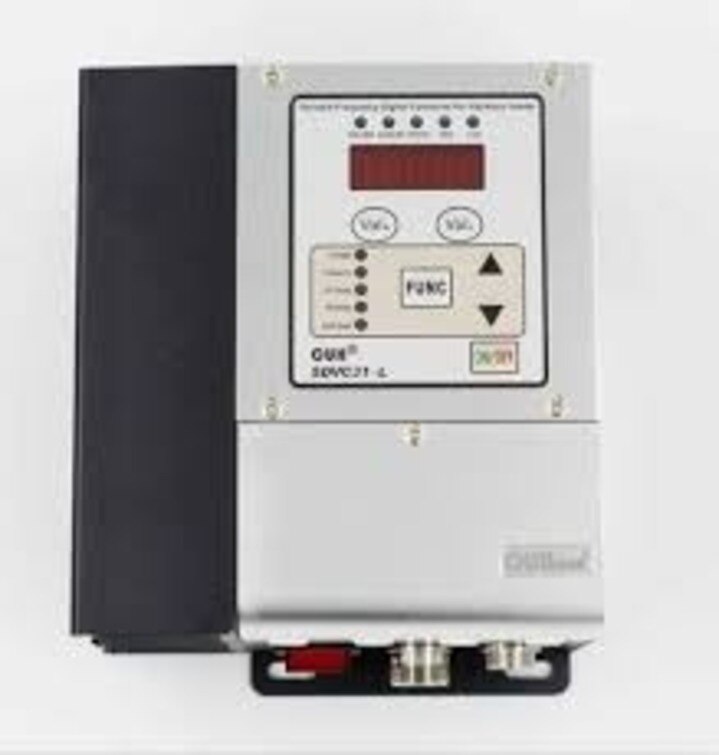
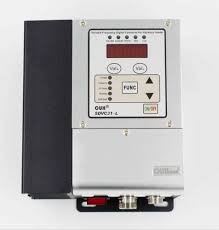 | Vibrator Feeder Controller SDVC31-L Vibrator Feeder Controllers The SDVC31-L Vibrator Feeder Controller is a high-performance digital controller designed to regulate the amplitude and feeding speed of... View product → |
Frequently asked questions
What type of uneven flow should you identify before changing a feeder setting?
Identify whether output changes with hopper level, downstream demand, material condition, buildup, or a mechanical fault. Each cause requires a different correction.
How do manual adjustment and SDVC31-L behave during a changing shift?
Manual adjustment holds one operator-selected setting until someone changes it. An SDVC31-L setup can adjust feeder output in response to a changing demand signal, reducing repeated operator corrections.
What causes SDVC31-L feeder control problems?
Check wiring, signal scaling, setpoint limits, controller configuration, feeder mechanics, material flow, and sensor or downstream-machine feedback before replacing the controller.
How can you compare a vibrator feeder controller with a repeatable production test?
Run manual and automatic control at the same material, feeder condition, demand range, and test duration. Record setpoints, output counts, stoppages, hopper level, and operator interventions.