A 16 amp marking does not prove that a pull cord switch is suitable for a conveyor emergency-stop circuit, and tightening the rope alone can leave a dangerous fault hidden. You will be able to identify the installed device, isolate the conveyor safely, decide whether restoration is justified, and complete mechanical, electrical, and functional checks before returning it to service.
Key takeaways
- Replace the switch if its enclosure, contacts, shaft, or rope mechanism is damaged.
- Isolate and lock out the conveyor before recording the existing safety circuit.
- Test emergency stop, reset, and control-circuit operation at every rope access point.
- Match replacement current, contact arrangement, enclosure rating, rope length, and reset method.
Decide Whether the Switch Can Be Restored or Must Be Replaced
A 16 amp marking does not prove that a pull cord switch is suitable for your conveyor or safe to restore. Before touching it, establish the installed device, the safety architecture, the circuit duty, and the damage that caused the failure.
Any plan for how to restore a 16 amp pull cord switch in Pune must account for monsoon moisture, abrasive dust, and factory washdown.
1. Read the nameplate and record the part number, voltage, AC or DC duty, utilization category, pole count, contact arrangement, cable-entry size, mounting pattern, rope direction, reset style, and enclosure rating.
2. Trace the safety function: identify normally closed and positive-opening contacts, dual channels, the safety relay or contactor, local or remote reset, control voltage, and the motor-control interlock. Confirm the fuse or breaker coordination and fault-current duty; 16 A alone does not show that the device can interrupt locked-rotor current or a short circuit.
3. Inspect for a cracked housing, missing cover, damaged gasket, loose gland, corrosion, burned contacts, failed insulation, seized mechanism, repeated false trips, or a reset that will not latch. Water inside the enclosure is a replacement warning, not a drying-and-return-to-service job.
4. Restore the switch only if the manufacturer provides an approved service procedure and genuine contact or latch parts. Replace it when the enclosure, ingress protection, mechanism, or safety contacts cannot be verified; a matching hole pattern does not make a single-contact replacement equivalent to a dual-channel device.
Isolate the Conveyor and Record the Existing Safety Circuit
Stop the conveyor, open its upstream isolator, and apply lockout/tagout before opening the pull-cord switch or control panel. Release stored pneumatic, hydraulic, electrical, and gravitational energy. Prove the conductors dead with an approved tester by checking phase-to-phase, phase-to-earth, and control-circuit terminals; prove the tester on a known live source before and after testing.
With conductors isolated, photograph the terminal layout and mark each wire before disconnection. Check contact continuity only after separating the switch wires from the machine circuit, because parallel paths can give a false result. Continuity does not prove that the emergency stop will stop the conveyor or that the circuit will remain latched.
Record these details for the restoration or replacement:
- Conveyor or line identification and exact switch location
- Device make, part number, nameplate rating, and enclosure rating
- Number of poles, normally open or normally closed contacts, and positive-opening marking
- Single-channel or dual-channel wiring, safety relay or safety PLC connection, and control voltage
- Local or remote reset, motor-control interlock, and any monitored feedback circuit
- Cable-entry size, mounting-hole pattern, cord route, switch spacing, pull direction, and cord length
- Isolation point, inspection date, measured continuity, and visible defects
Do not order a switch solely because it is rated 16 A or fits the existing holes. Match the installed safety architecture. A single ordinary contact cannot replace a dual-channel device without reducing the protection, even if the conveyor starts and stops during a basic check.
Inspect and Set the Rope, Mechanism, Enclosure, and Terminals
Begin with lockout/tagout, then isolate the conveyor’s electrical, pneumatic, hydraulic, gravity, and stored mechanical energy. Prove every conductor dead with a tested meter; an emergency-stop function does not make repair safe.
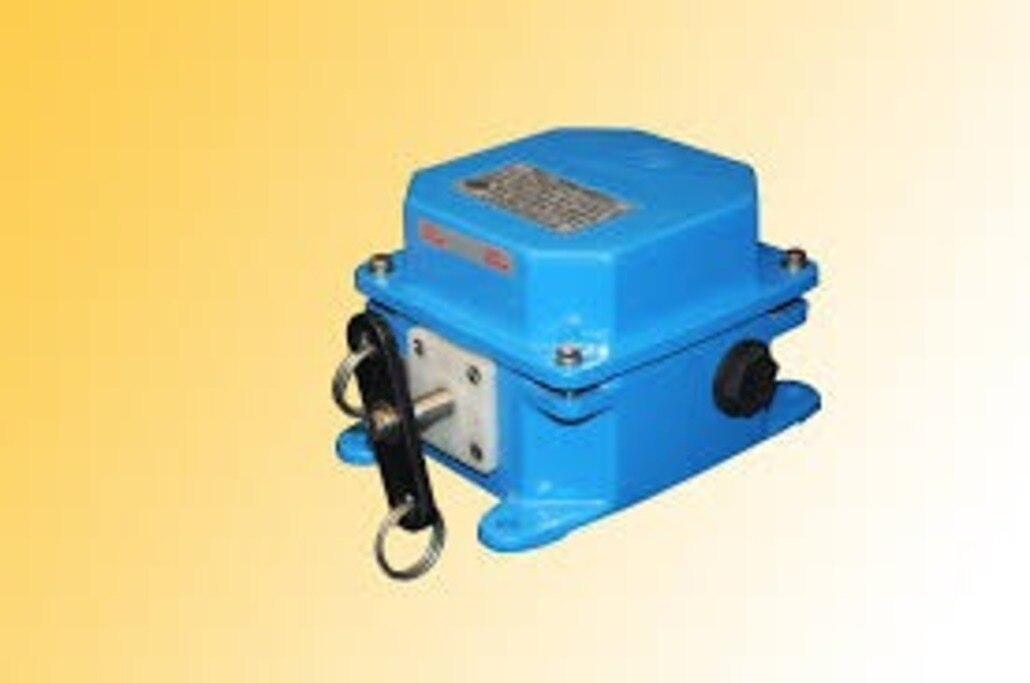
Inspect the rope and switch body before adjusting anything. During 16 amp pull cord switch maintenance in Pune, check the rope for fraying, kinks, corrosion, crushed sections, and incorrect length. Examine the enclosure gasket, cover screws, cable glands, terminal sealing, mounting points, and mechanism for water, abrasive dust, impact damage, or corrosion.
Pune monsoon exposure can make a dry-looking enclosure intermittently unsafe.
- Clean approved reusable parts with a suitable dry method. Do not file contacts, bypass a latch, or fit an unapproved spring or contact block.
- Replace the rope if strands are damaged, clamps slip, or the rope does not follow the manufacturer’s specified path and clearance.
- Set rope tension and travel from the manufacturer’s limits. Excess tension can block operation in one direction; slack, a seized shaft, a weak spring, or poor alignment can leave part of the rope ineffective.
- Identify each conductor and reconnect it to the recorded terminal positions. Tighten terminals to the manufacturer’s torque and confirm that glands grip the cable without damaging its seal.
- Reject the switch for a cracked housing, failed gasket, water ingress, burned contacts, failed insulation, missing cover, seized mechanism, or a reset that will not latch. That is replacement, not conveyor pull cord switch recovery.
Test the Emergency Stop, Reset, and Control Circuit at Every Access Point
A continuity beep does not prove that a restored pull-cord switch will stop the conveyor. Lock out electrical, pneumatic, hydraulic, gravity, and stored mechanical energy, then verify dead conductors with a suitable meter before touching terminals. The emergency-stop device is not an energy-isolation device.
After reconnecting the identified conductors, carry out these checks:
- With the cord released and the reset engaged, verify the intended normally closed contacts and both safety channels, where fitted, show the specified closed state.
- Pull the cord at each access point and confirm the contacts open, the safety relay or control circuit drops out, and the conveyor cannot run.
- Check that the mechanism latches after the pull and that releasing the cord does not restore the circuit.
- Operate the intended local or remote reset and confirm reset is possible only from the designed location and only after the hazard is clear.
- Press the reset without issuing a start command. The conveyor must remain stopped; a separate start command must be required.
- Where the installed design supports it, test a broken, detached, or slack cord and confirm the required safe response.
- Inspect the enclosure, rope, clamps, terminals, and reset after cycling; a loose terminal, seized latch, or rope that fails to return is a failed test.
Run the conveyor under controlled conditions and repeat the trip at every access point. Record the line, location, part number, contact arrangement, test date, measured operation, reset result, and defects corrected. Mark the record as a functional emergency-stop test, not merely a continuity test.
Choose a Compatible Replacement and Document Factory Service
Replace the switch when the manufacturer provides no approved service procedure or spare latch/contact parts. Also replace it if the housing is cracked, the gasket or cable gland admits water, the mechanism is seized, contacts are burned, insulation has failed, covers are missing, or reset does not latch.
Drying a water-damaged enclosure and returning it to service can create an intermittent emergency circuit during Pune’s monsoon.
| Existing condition | Decision | Reason |
|---|---|---|
| Approved service parts and intact enclosure | Restore | Service remains traceable and the ingress protection is preserved |
| Damaged mechanism, contacts, gasket, or enclosure | Replace | Cleaning cannot restore mechanical integrity or insulation |
| Unknown contact arrangement or safety architecture | Identify before ordering | A 16 amp rating does not prove compatibility with the control circuit |
For pull cord emergency switch replacement in Pune, match more than the mounting holes. Record the old device’s part number, contact arrangement, number of poles, positive-opening contacts, dual channels, control voltage, cable-entry size, enclosure rating, rope route and length, pull direction, reset style, safety-relay connection, and motor-control interlock.
Replacing a two-channel device with one ordinary contact can weaken the stop function.
For pull cord switch service for factories in Pune, require an acceptance record containing:
- Conveyor or line name and switch location
- Device part number and test date
- Isolation point and cord route
- Defects corrected and parts replaced
- Observed trip, latch, manual reset, and separate restart-command results
- A clear statement that the test was a functional emergency-stop test, not merely continuity testing
SAI CONTROL SYSTEM can be assessed against these records when you compare a service quotation with the installed safety architecture. A pull cord stop never replaces lockout of electrical, pneumatic, hydraulic, gravity, and stored mechanical energy.
Related products
 | Pull Cord Switch The 16A Pull Cord Switch is a robust and dependable switch designed to offer a convenient method for controlling electrical appliances. View product → |
 | Pull Cord Switch Pull Cord Switch With Lamp Indication The Pull Cord Switch with Lamp Indication is a premium-grade control switch designed to enhance safety and convenience in industrial and commercial... View product → |
Frequently asked questions
When should you restore or replace a 16 amp pull cord switch?
Restore it only when the enclosure, contacts, mechanism, terminals, and rope system remain serviceable. Replace it when damage prevents reliable operation or the switch does not match the safety circuit.
How do you isolate a conveyor before servicing its pull cord switch?
Stop the conveyor, isolate every energy source, apply lockout and tagout, verify zero energy, and record the existing switch wiring and control-circuit arrangement.
What should you inspect on a conveyor pull cord switch?
Inspect the rope, tension, mechanism, enclosure, seals, contact blocks, terminals, mounting, corrosion, and cable entries before resetting or replacing the device.
How do you test a pull cord emergency switch after service?
Operate the rope at each access point, confirm the conveyor stops, verify the switch latches or resets as designed, and check that the control circuit prevents restart until the required reset procedure is completed.
How do you choose a replacement pull cord switch in Pune?
Match the contact arrangement, electrical duty, enclosure protection, rope span, indicator and reset features, mounting dimensions, cable entry, and compatibility with the installed safety circuit.