Choosing a controller by model name or advertised throughput can leave a process plant with unstable feed, electrical incompatibility, or an installation that fails its environmental and safety review. By the end, you will be able to compare feeder technologies, write a controller specification, verify SDVC31-L documentation, and test a supplier’s equipment under real plant conditions.
Key takeaways
- Match controller voltage, current, frequency, and PLC signals to the feeder nameplate.
- Test feeder output with the actual material before approving the installation.
- Separate power, control, and safety wiring to reduce EMC and shutdown risks.
- Require documented performance results and interface checks before purchase approval.
When a linear electromagnetic feeder is the right process choice
Choose a linear electromagnetic feeder when you need a short, controlled transfer of dry, free-flowing material and the process benefits from gentle, adjustable movement rather than continuous bulk transport. It suits granules, pellets, flakes, and parts that must avoid crushing or segregation.
1. Define the material. Choose linear vibration for particles that flow without persistent bridging or smearing. Sticky powders, damp solids, and strongly cohesive fines favour a screw feeder or loss-in-weight feeder with agitation. A rotary feeder suits controlled discharge from a hopper and, when designed for it, an air-pressure seal.
2. Define the accuracy. A linear feeder works well for repeatable volumetric dosing over a short path, but open-loop control does not correct for changing bulk density or mains voltage. Choose loss-in-weight when recipe accuracy depends on mass flow; add amplitude feedback when the linear process needs tighter consistency.
3. Compare the route. Choose linear equipment for an open, compact, horizontal or inclined transfer between nearby machines. Choose a belt for long distances or high tonnage, and pneumatic conveying for enclosed routing across a plant, accepting higher air demand, wear, and particle impact.
4. Check the controller and plant. A vibrator controller for process plants must regulate the feeder’s coil within its rated electrical range and accept the plant’s command signal. Separate its run command from emergency-stop and guard circuits.
For process plant feeding equipment in pune, request a loaded trial using your actual moisture, particle-size distribution, and bulk density. Reject a choice that bridges, surges, bounces, or misses the required rate at minimum and maximum output.
Match the controller to the feeder nameplate and PLC interface
Reject a controller that matches only the feeder’s throughput. Match its electrical output to the electromagnetic coil’s nameplate: coil voltage, rated and starting current, phase, mains voltage, and 50 or 60 Hz supply. Size for continuous and inrush current, because an undersized output overheats even when the feed rate looks correct.
Ask the supplier to confirm these points in writing:
- Controller output-voltage range and maximum continuous current
- Feeder power rating, coil resistance or inductance, and permitted frequency range
- Required supply voltage, phase configuration, protective fuse, and earthing arrangement
- External command type: local potentiometer, 0–10 V, 4–20 mA, pulse, or digital run/stop
- PLC input or output logic, signal isolation, fault relay, remote reset, and speed feedback
- Compatible sensor, connector pinout, enclosure rating, and exact datasheet revision
| Check | Accept only when | Failure consequence |
|---|---|---|
| Model identity | The SDVC31-L suffix, manufacturer, revision, and replacement status are documented | A similarly named unit may have different ratings |
| Control interface | The PLC’s signal type, scaling, polarity, and response are tested | The feeder may run at the wrong amplitude or not start |
| Safety function | Emergency stop, guard interlock, and feeder isolation use the plant safety circuit | A run/stop terminal cannot provide protective stopping |
A search for an SDVC31-L controller supplier should include the complete nameplate, not just the model number. Require a wiring diagram, parameter backup, fault-code list, commissioning procedure, and spares list. A linear vibrator controller supplier for process plant in Pune should also state the replacement cross-reference and sensor compatibility before purchase approval.
Size the feeder, then commission it with the actual material
Specify a guaranteed throughput range in kilograms per hour using the actual product, not an empty-tray demonstration. Bulk density, particle-size distribution, moisture, cohesion, temperature, and flowability determine whether the stated capacity becomes steady flow or a bridge.
Record these design inputs before selecting the feeder:
- Minimum, normal, and maximum rate
- Bulk density at each rate
- Largest particle and the percentage of fines
- Hopper outlet size, tray length, inclination, and available headroom
- Permitted accuracy and acceptable noise level
Commission with a representative loaded batch. Start at low amplitude and the feeder’s mechanical operating frequency, then increase amplitude until the minimum rate is met. Raise frequency only within the feeder’s tuned range; running far from resonance wastes current, while excessive amplitude makes particles bounce, segregate, and generate noise.
Observe the discharge, not just the controller display. Surging indicates unstable loading or operation near an unsuitable resonance; bridging points to a restricted outlet, cohesive product, or insufficient vibration. Redistribute the load and correct the hopper or tray before adding power.
Phase-angle control changes effective coil voltage, whereas variable-frequency control shifts the drive frequency. Specify the required frequency range after loaded trials. An open-loop controller will not hold amplitude when payload or mains voltage changes, so state the accelerometer or optical sensor, signal range, and mounting arrangement if rate stability matters.
These checks apply whether you are evaluating a linear feeder controller near Pune or another supplier.
Design the installation around EMC, environment, and safety boundaries
Before a vibrator controller for process plants enters the panel, define four boundaries: electromagnetic noise, environmental exposure, hazardous location, and stored electrical energy.
1. Specify the wiring arrangement in the quotation. Identify the feeder coil voltage, current, phase, and the supplier’s recommended maximum cable length. Route the coil cable separately from PLC, weighing, sensor, and variable-frequency-drive cables; install the specified EMC filter, ferrite, or screened cable, and terminate shields and protective earth exactly as the manufacturer directs.
Phase-angle thyristor or triac control can distort the mains waveform and upset nearby instruments.
2. Bond the controller enclosure and panel backplate to protective earth with a low-impedance connection. Check PE continuity, fuse or breaker rating, cable glands, connector torque, and segregation between mains, control, and safety wiring. Record whether the supplier requires a dedicated earth or a particular shield termination.
3. Confirm the enclosure rating under IEC 60529, then check what that rating does not cover: condensation, corrosion, gland sealing, material compatibility, and the plant’s cleaning chemicals. A washdown area needs a suitable enclosure material and connectors, not an IP number alone.
4. If the panel is in a classified area, record the gas or dust group, temperature class, and zone, then obtain the required IEC 60079 certification or installation arrangement. Moving the controller outside the zone is often the simpler boundary.
5. Prove that the emergency-stop or safety relay removes feeder energy, prevents automatic restart after power returns, and reports controller faults to the PLC. Test the complete safety chain before production wiring is accepted.
Make the supplier prove performance before purchase approval
Approve the purchase only after the supplier turns its model number into testable evidence. A linear vibrator controller supplier for process plant in Pune should submit feeder-specific documents and a trial report, not only a catalogue page.
1. Require a signed compatibility sheet listing coil voltage, rated and starting/inrush current, phase configuration, mains frequency, controller supply, output range, and command method. Confirm local/remote selection, 0–10 V or 4–20 mA input, run/stop logic, alarm or ready contacts, minimum-speed behaviour, and power-failure recovery.
An “SDVC31-L controller supplier” must prove the proposed unit matches your coil, not merely name the SDVC31-L.
2. Demand a trial using your actual material at minimum, normal, and maximum commanded output. Record feed rate, amplitude or frequency setting, start-up behaviour, surging, bouncing, segregation, noise, and repeatability; retain the dated data sheet and video.
3. Put a witnessed acceptance test in the purchase order. Include cold start, repeated starts, loaded running, mains loss and restoration, open- and short-circuit sensor response, over-temperature response, and upstream safety-circuit operation. A speed-knob demonstration is not acceptance testing.
4. List stocked spares and documents: controller, compatible sensor, control fuse or protection device, mating connectors, programming or calibration interface, wiring diagram, parameter backup, fault-code list, commissioning procedure, and replacement cross-reference. Specify commissioning attendance, training, response time, repair route, and spare availability in writing.
SAI CONTROL SYSTEM becomes a serious comparison point only when it provides these records for the proposed process plant feeding equipment in Pune. A seller that cannot supply them is offering a part number, not proven plant support.
Related products
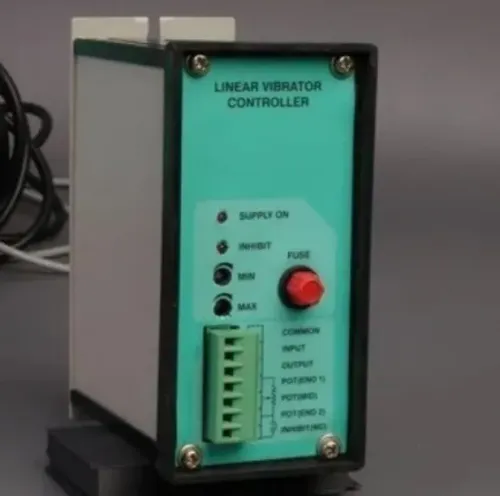
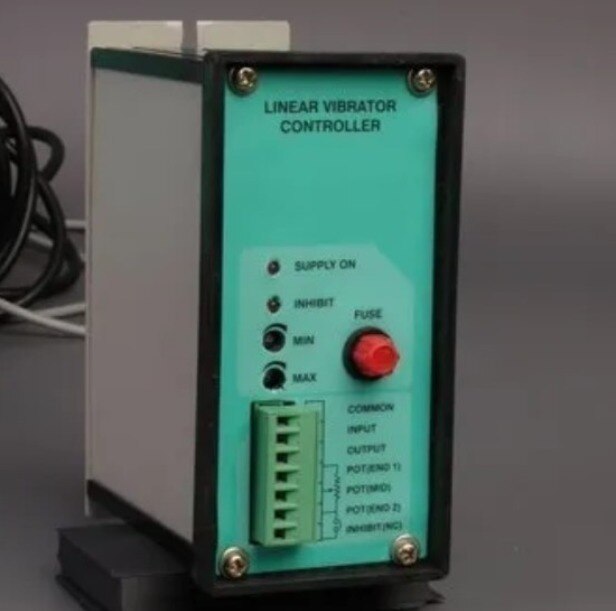
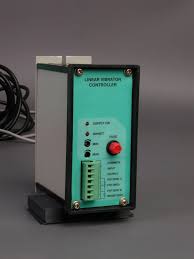 | Vibrator Feeder Controller Acknowledged as a genuine and trusted company in the industry, we are committed to offering a superior range of Linear Vibrator Controllers tailored... View product → |
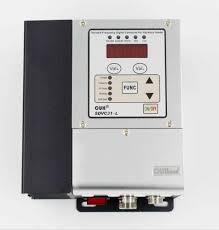 | Vibrator Feeder Controller SDVC31-L Vibrator Feeder Controllers The SDVC31-L Vibrator Feeder Controller is a high-performance digital controller designed to regulate the amplitude and feeding speed of... View product → |
Frequently asked questions
When is a linear electromagnetic feeder the right process choice?
Use one for short, controlled transfers of dry, free-flowing granules, pellets, flakes, or parts where gentle adjustable movement matters more than bulk conveying.
How do you match a vibrator controller to the feeder and PLC?
Check the feeder nameplate for supply voltage, current, frequency, and coil requirements, then confirm the controller accepts the PLC’s signal type and range.
How should you commission a linear feeder?
Set the feeder with the actual material, measure feed rate across the operating range, and check startup, stopping, bridging, segregation, and overload behaviour.
What should a supplier prove before purchase approval?
Request a test record showing the material, feed rate, controller settings, electrical interface, installation conditions, and any limits found during testing.