A metal target near a sensor and a bin full of flour, grain, cement, or plastic pellets present two different level-sensing problems. By comparing how each device detects material, what can go wrong, and what the installation requires, you can select the right point-level method instead of matching equipment by price or body size.
Key takeaways
- Inductive sensors detect conductive metal targets, not powder height.
- Choose inductive sensing for contactless detection and fast response near metal targets.
- Choose rotary paddles for direct bulk-powder level detection inside vessels.
- Compare material, temperature, dust, mounting space and maintenance before buying.
What each technology actually detects
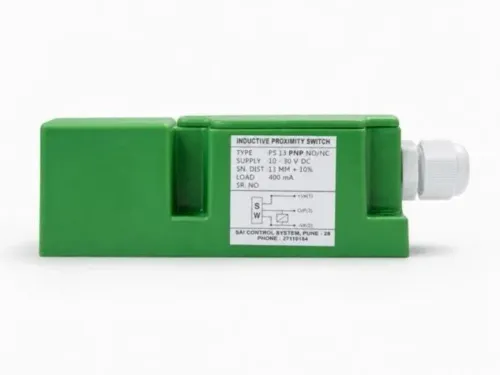
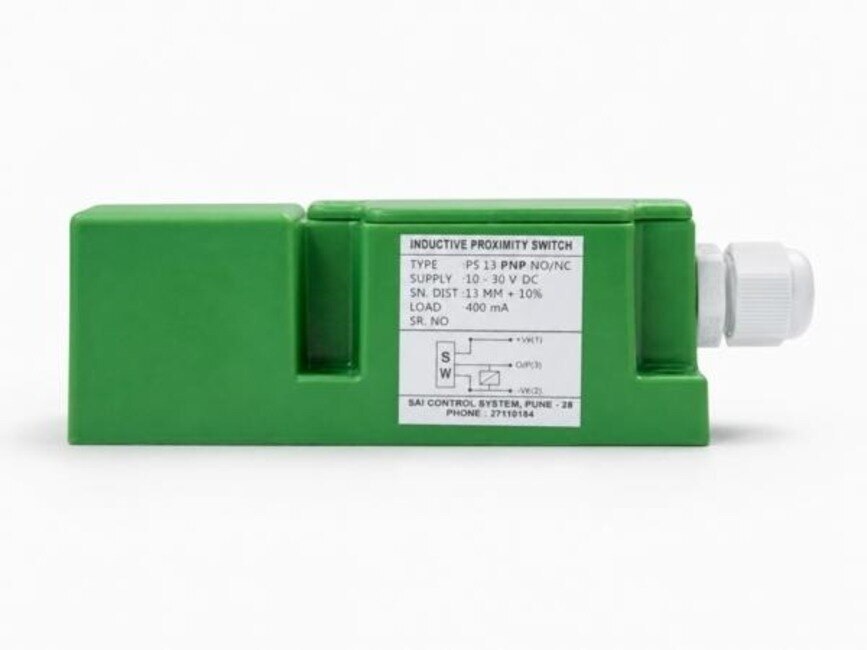
An inductive sensor detects a nearby conductive metal target when that target changes the sensor’s electromagnetic field. It does not detect a powder’s height directly, and the material does not need to touch or move the sensor. The target could be a metal flag, vessel part, chute gate, or metal container.
A standard inductive sensor is generally unsuitable for dry, nonconductive products such as:
- Plastic pellets
- Grain
- Flour
- Cement
Add a conductive target to make those installations workable. Without one, the sensor has nothing electrically conductive to detect.
A rotary paddle level switch uses a motor-driven paddle. When bulk material reaches the paddle, resistance increases, rotation slows, or the paddle stalls; the switch then changes state. That lets it detect the product itself, including nonconductive powders and granules.
Inductive proximity sensor benefits include rapid solid-state switching, while a paddle responds through a mechanical torque change. Both are point-level devices: install either one at a high-level or low-level position for switching, not for continuous measurement of vessel height.
| Technology | What it detects | Suitable use |
|---|---|---|
| Inductive sensor | Conductive metal target through field change | Metal parts, gates, containers, or added metal flags |
| Rotary paddle level switch | Material resistance against a rotating paddle | Direct detection of free-flowing powders and granules |
A rotary paddle level switch in Pune is therefore not interchangeable with an inductive sensor. Choose the inductive type for a defined metal target; choose the paddle when the bulk material itself must trigger the level switch.
Where inductive sensing has the practical advantage
A metal tote, chute gate, or defined conductive target is where inductive sensing earns its place. The sensor switches electronically in milliseconds, gives repeatable operation over a high cycle life, and detects without product contact. These inductive proximity sensor benefits matter when a rotary mechanism would add avoidable wear or delay.
| Feature | Inductive sensor advantage |
|---|---|
| Mechanical parts | No bearings, shaft, paddle, or rotating seal to seize, wear, or inspect |
| Installation | Compact body with little intrusion into the chute or vessel |
| Switching | Fast solid-state output for interlocking gates, counting metal parts, or stopping a conveyor |
| Maintenance | Fewer mechanical inspections and no paddle entanglement |
The limits are just as practical. The sensing range is short, and the usable distance depends on target size, orientation, and the sensor’s flush or nonflush construction.
A catalogue distance quoted for mild steel does not automatically apply to stainless steel, aluminium, or small metal particles; verify the manufacturer’s correction factors and test the installed target.
An inductive sensor detects a conductive target, not the height of flour, grain, cement, plastic pellets, or another nonmetallic bulk product. It can false-trigger when a bracket, vessel wall, or nearby metalwork enters its field, especially after alignment changes.
Choose it for a defined metal target and fast switching; choose another point-level method when the product itself is nonconductive and no separate metal target exists.
When a rotary paddle is the more suitable choice
Choose a rotary paddle level switch when you need direct point-level detection of free-flowing, nonconductive solids rather than a metal target. Flour, grain, cement, plastic pellets, and similar powders or granules can stop the paddle through material resistance, even though they do not change an inductive sensor’s electromagnetic field.
Install the paddle at the high-level point to stop filling or at the low-level point to protect a conveyor or feeder from running empty. The rotating paddle gives visible mechanical evidence of operation, and the switch changes state when coverage increases torque, slows rotation, or causes a stall.
1. Confirm that the product flows freely around the paddle. Bridging above it, compacted material, or buildup can leave the vessel full while the switch reports an empty condition.
2. Provide access to the motor, gearbox, shaft, paddle, bearings, seals, and process connection. These moving parts need inspection and replacement access; a blocked paddle, damaged paddle, motor failure, or incorrect torque adjustment can cause nuisance trips or a failed-to-start condition.
3. Check the required response time. A rotary paddle uses torque and mechanical movement, so it responds more slowly than the millisecond-scale solid-state output of an inductive sensor.
4. Ask a rotary paddle level switch supplier for paddle material, torque settings, motor and gearbox details, and service clearances. Choose this design when direct detection of the bulk product matters more than rapid switching and mechanical access is acceptable.
A paddle detects resistance, not conductivity. That makes it the practical choice for many dry bulk solids, but not a continuous level transmitter.
Which installation conditions change the decision
A sound choice starts with the vessel, not the catalogue body or nominal range. For industrial level sensing in Pune, record the process temperature and pressure, dust concentration, abrasion, moisture, bulk density, particle size, flowability, vessel connection, ingress protection, cable entry, output rating, switching logic, and maintenance access.
- Reject an ordinary IP-rated device for a dust-explosion-risk area unless its equipment approval matches the hazardous-area classification, dust group, and temperature class.
- Confirm fail-safe behaviour during power loss and, for a rotary paddle, motor failure. Specify whether the output must indicate full, empty, fault, or loss of power.
- Check an inductive sensor’s face material and flush or nonflush mounting clearance; nearby brackets, vessel walls, or metalwork can cause false triggers.
- Check a rotary paddle’s seal, bearing, shaft, and paddle materials against heat, moisture, abrasion, and buildup.
| Option | Installation strengths | Conditions that change the decision |
|---|---|---|
| Inductive sensor | No shaft, bearing, paddle, or rotating seal; fast electronic switching | Needs a correctly sized, oriented metal target. Do not apply mild-steel range to stainless steel, aluminium, or small particles without verification. |
| Rotary paddle | Directly detects free-flowing powders and granules, including nonconductive products | Allow access to inspect the motor, gearbox, seal, bearing, shaft, and paddle. Bridging, compaction, buildup, blocked paddles, or wrong torque can cause false trips. |
| Either device | Point-level control with a defined output | Reject a selection based only on body size or initial price; compare approvals, operating limits, wiring, replacement access, and failure behaviour. |
How to compare suppliers and total installation effort
Compare suppliers by installation effort, not catalogue price: request complete operating limits, a wiring diagram, output type, replacement lead time, process connection, approvals, and commissioning guidance. A lower unit price can hide added brackets, targets, or maintenance.
| Option | Ask before ordering | Installation effort |
|---|---|---|
| Inductive sensor | Target metal and dimensions; orientation; required sensing distance; mounting clearance; cable or connector type | Check flush or nonflush mounting; add a separate metal target or mounting bracket for nonconductive product |
| Rotary paddle | Minimum and maximum bulk density; particle size; moisture; flowability; paddle material; motor or gearbox details; torque adjustment; hazardous-dust requirements | Provide vessel connection, shaft clearance, and access for replacement |
For a rotary paddle level switch supplier, also specify process temperature, pressure, output rating, switching logic, and behaviour after power loss or motor failure. For inductive sensing, confirm whether nearby vessel metal can trigger it and obtain the mounting diagram.
SAI CONTROL SYSTEM can fit a Pune project when it supplies these selection and commissioning details, not merely a sensor body.
Use a rotary paddle level switch in Pune comparison to check lead times for the complete switch, motor/gearbox or paddle assembly, cable and connector, plus service response. Choose inductive sensing for fast detection of defined metal targets; choose a rotary paddle for direct point-level detection of free-flowing nonconductive solids when mechanical access is acceptable.
That is the useful test for industrial level sensing in Pune, not location alone.
Related products
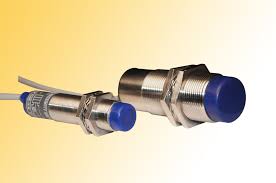 | Inductive Proximity Sensor The Inductive Proximity Sensor from Sai Control Systems is a vital component for modern industrial automation, offering non-contact metal detection... View product → |
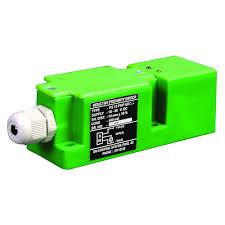 | Inductive Proximity Sensor Square Type Inductive Proximity Sensor The Square Type Inductive Proximity Sensor from Sai Control Systems is a high-performance, non-contact sensor designed for efficient and reliable... View product → |
Frequently asked questions
What does an inductive sensor detect compared with a rotary paddle level switch?
An inductive sensor detects a nearby conductive metal target by sensing a change in its electromagnetic field. A rotary paddle level switch detects bulk material when powder or granules resist the rotating paddle inside a vessel.
When do inductive sensor benefits outweigh those of a rotary paddle?
Inductive sensing is advantageous when you need contactless detection, fast switching, compact installation or detection of a metal flag, gate or vessel part rather than direct powder contact.
When is a rotary paddle level switch the more suitable choice?
A rotary paddle is suitable when you need direct high- or low-level detection for powders and granules inside a bin, hopper or silo, especially when no metal target can be provided.
What installation conditions affect the choice in Pune?
Check the material’s flow behaviour, dust load, temperature, moisture, vessel wall, available mounting space, target material and access for cleaning or maintenance before choosing.
Related product
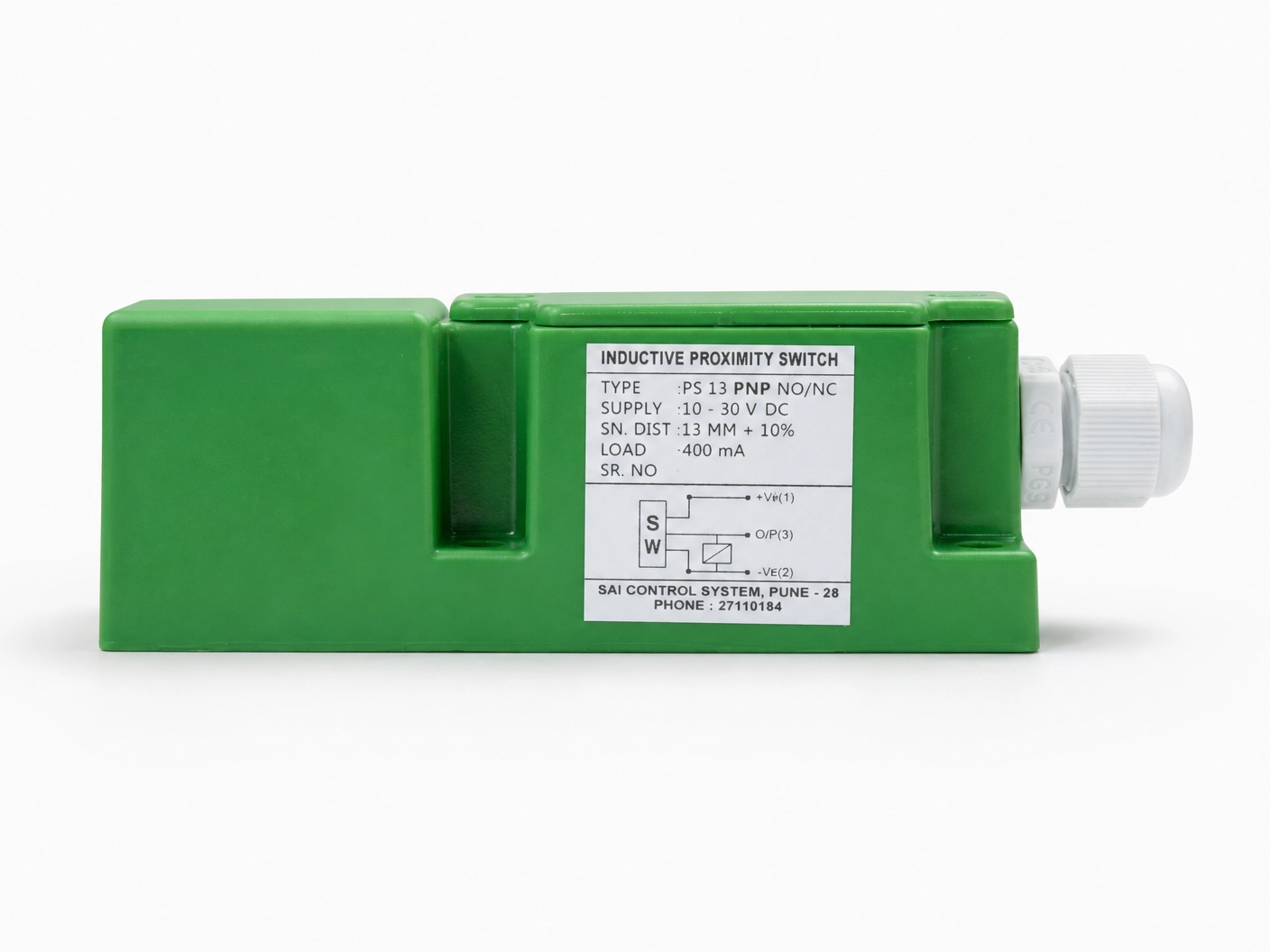 | Inductive Proximity Sensor Model: IPS13PNODF40 Size : 40*40*112mm Logic : PNP NO Sensing Distance : 15mm Sensing Face : Front Connection : PG Gland View product → |