The right choice depends on whether you need to detect a nearby metal target or identify material reaching a level inside a vessel, hopper, or chute. By the end, you will be able to match each technology to the material, installation, environment, output, and commissioning test your Pune plant actually requires.
Key takeaways
- Use inductive sensors for conductive targets, not loose powder or liquid levels.
- Choose RF admittance switches for point-level detection in bins and silos.
- Check material properties, probe installation, temperature, and buildup before ordering.
- Demand application tests and documented switching performance before commissioning.
What does each sensor actually measure?
An inductive proximity sensor measures the presence or position of a conductive metal target inside its electromagnetic field. It does not measure plastic, wood, powder, grain, or liquid directly. A metal flag attached to a conveyor or machine therefore provides the target when the product itself is non-metallic.
| Device | Physical condition detected | What the output means |
|---|---|---|
| Inductive proximity sensor | Metal entering the sensor’s operating zone | A target is present at a particular position or distance |
| RF admittance level switch | Change in electrical admittance between a probe and a reference, commonly the vessel wall | Material has reached the probe at its installed level |
An RF admittance switch applies a radio-frequency signal to the probe and detects how the electrical relationship changes when bulk solid or liquid contacts, surrounds, or approaches it. The vessel wall, grounded reference, or separate reference electrode completes the measurement path.
This lets it detect materials that an inductive device cannot sense, including non-metallic powders and liquids.
This is the key inductive proximity sensor comparison: one detects a metal object; the other detects material presence at a process point. An RF switch remains a point-level device, even when you install probes at high, low, or intermediate positions.
It does not provide continuous level measurement unless the selected instrument is specifically designed as a continuous transmitter.
For industrial level sensing in Pune, compare the guaranteed operating distance for the actual metal target, not only the nominal catalogue range. Stainless steel, aluminium, brass, and copper reduce usable inductive distance through target-material correction factors.
Which instrument fits conveyors, machines, bins, and silos?
Choose an inductive proximity sensor for machine motion and metal targets; choose an RF admittance level switch for material presence at a bin, silo, vessel, or chute. An inductive sensor counts a steel flight, detects shaft teeth, or confirms a metal part.
It will not directly detect plastic, grain, powder, wood, or liquid; add a metal flag to the moving machine instead.
| Application | Better fit | Reason and caution |
|---|---|---|
| Conveyor counting | Inductive proximity sensor | Counts metal products or a metal target on each carrier; product spacing and target size control reliability. |
| Shaft position or tooth detection | Inductive proximity sensor | Detects rotating metal features without contact; verify operating distance for the actual steel, stainless steel, aluminium, brass, or copper target. |
| Machine guarding | Safety-rated interlock or switch | An ordinary three-wire PNP or NPN sensor is not a safety device. Use the required safety architecture and certification. |
| Vessel high- or low-level alarm | RF admittance level switch | A probe at the selected point detects solids or liquids; it is a point-level alarm, not automatically a continuous transmitter. |
| Hopper blockage | RF admittance level switch | Detects material remaining at a chute or outlet where buildup and dust make object sensing unsuitable. |
| Solids or liquid interface | RF admittance level switch | Suitable for conductive and non-conductive media when the vessel wall or reference provides the electrical return. |
For an inductive proximity sensor or rf admittance level switch in pune, give the supplier vessel grounding, probe length, material, coating tendency, temperature, pressure, output, and hazardous-area requirements. A nominal range or probe length alone leaves the main failure modes unresolved.
How do material, installation, and plant conditions change the choice?
Choose an inductive sensor when a metal target passes a known gap; choose an RF admittance switch when material must be detected at a vessel point. That distinction matters more than the catalogue range.
| Option | Material and installation | Plant-condition comparison |
|---|---|---|
| Inductive proximity sensor | Requires a metal target. Compare the guaranteed operating distance for the actual steel, stainless steel, aluminium, brass, or copper target, not the nominal steel distance. It detects across a gap and does not penetrate the process. | Non-metallic dust usually has little effect, but wet or metallic buildup can reduce the gap. Check switching frequency, target speed, vibration, and whether the target can stop inside the sensing field. Confirm temperature, cable entry, and washdown exposure. |
| RF admittance level switch | Detects a change between the probe and a reference, commonly the vessel wall. Compare probe insertion length, mounting position, vessel material, grounding, and the material’s dielectric behaviour. It can detect conductive or non-conductive solids and liquids. | Dust, moisture, and product buildup can change admittance. Specify coating tendency and cleaning method; probe and seal materials must withstand process temperature and washdown chemicals. Vibration demands rigid mounting and strain relief. |
For industrial level sensing in Pune, treat IP rating as only an enclosure-water and solids check. Review abrasive dust, caustic washdown, process temperature, probe coating, housing seals, and cable glands separately. RF probe penetration must reach the intended level without entering an agitator path or creating a snag point.
What specifications and tests prevent commissioning failures?
Specify the guaranteed operating distance for the actual target, not the catalogue nominal distance. Nominal range uses a standard steel target; stainless steel, brass, aluminium, and copper reduce usable distance. State whether the inductive sensor is flush or non-flush, then verify the required clearance around its face.
Ignoring non-flush clearance causes unstable switching or permanent actuation.
For an RF admittance switch, document the probe insertion length, vessel material, reference-ground arrangement, process temperature and pressure, dielectric behaviour, coating tendency, and required output. A nominal probe length and “relay output” do not define a reliable installation.
- Match output wiring to the control system: PNP or NPN, normally open or normally closed, supply voltage, load current, cable length, and short-circuit protection. Define whether loss of power means alarm or normal operation.
- Treat guarding, emergency-stop, and safety-related controls separately. An ordinary three-wire proximity output is not a safety-rated interlock; specify the required safety architecture, diagnostic coverage, and certification.
- Bond and ground the vessel, sensor body, cable shield, and RF reference as the manufacturer’s wiring diagram shows. Poor bonding creates false level changes.
Acceptance testing must use the installed geometry and actual process. For a conveyor detector, test representative product at actual belt speed, aperture, target orientation, and contamination size; wet, salty, or conductive product can hide metal through product effect. For an RF switch, test empty, filling, full, and coating conditions.
Record every trip and reset, including power loss and cable disconnection. A proper inductive proximity sensor comparison and a metal detection sensor supplier in Pune should both produce these test records before commissioning.
How should Pune buyers evaluate the supplier and reject the wrong technology?
Reject the proposal if it names only a probe length and output. A reliable choice depends on the material, mounting, and failure condition you need to detect.
Give an rf admittance level switch supplier in Pune:
- Vessel material and grounding arrangement, probe insertion length, process pressure, temperature, dielectric behaviour, coating tendency, and hazardous-area classification.
- For an inductive proximity sensor, target metal, target size, sensing distance, speed, orientation, switching frequency, and PNP or NPN wiring.
- For conveyor metal detection, product type, belt speed, aperture dimensions, target metal, contamination size, moisture, salt content, and reject method.
| Technology | Reject it when |
|---|---|
| Inductive proximity sensor | The process target is plastic, powder, liquid, or another non-metal material; it cannot measure bulk level or an interface. |
| RF admittance level switch | You need shaft position, tooth counting, a local machine target, or reliable operation where probe coating changes the electrical reference. |
| Conveyor metal detector | You only need to confirm a nearby metal component; an aperture system adds unnecessary installation and product-effect testing. |
A metal detection sensor supplier in Pune must test representative product at actual belt speed, aperture, target orientation, and contamination size. An empty aperture and large steel ball prove little.
Before purchase, insist on a site trial or sample test using your material. Record false trips, missed detections, buildup response, output timing, grounding, washdown recovery, and temperature performance.
SAI CONTROL SYSTEM should receive these same conditions when you request an inductive proximity sensor or rf admittance level switch in Pune, so competing quotations are genuinely comparable.
Related products
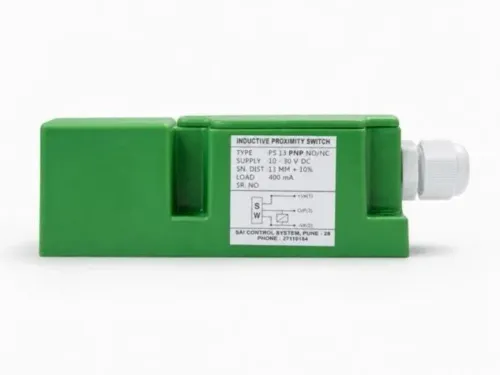
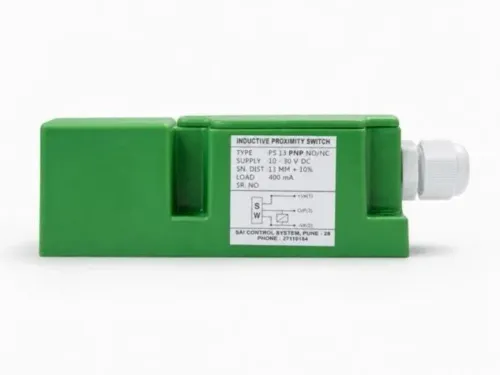
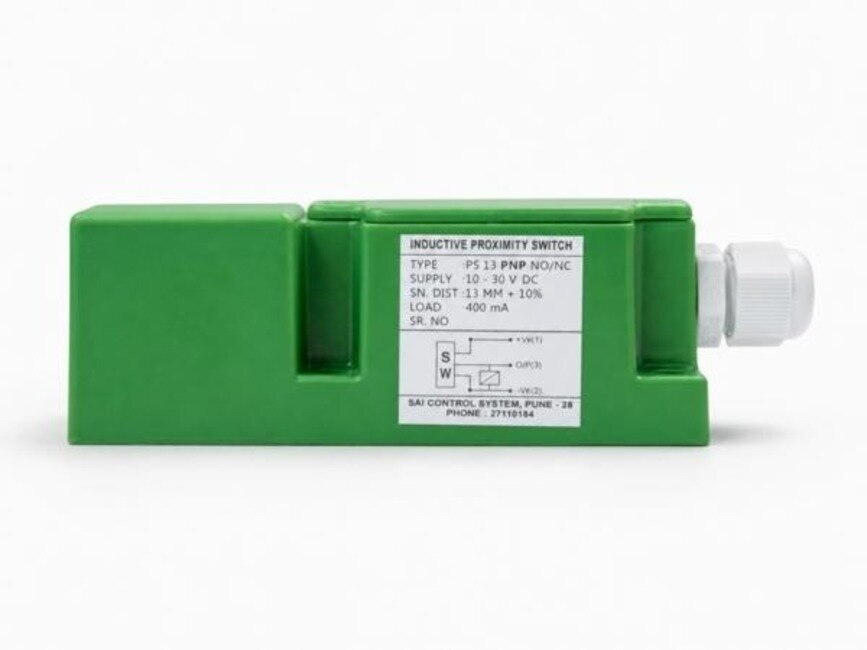
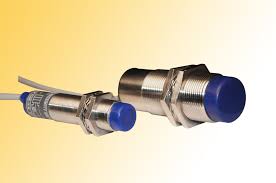 | Inductive Proximity Sensor The Inductive Proximity Sensor from Sai Control Systems is a vital component for modern industrial automation, offering non-contact metal detection... View product → |
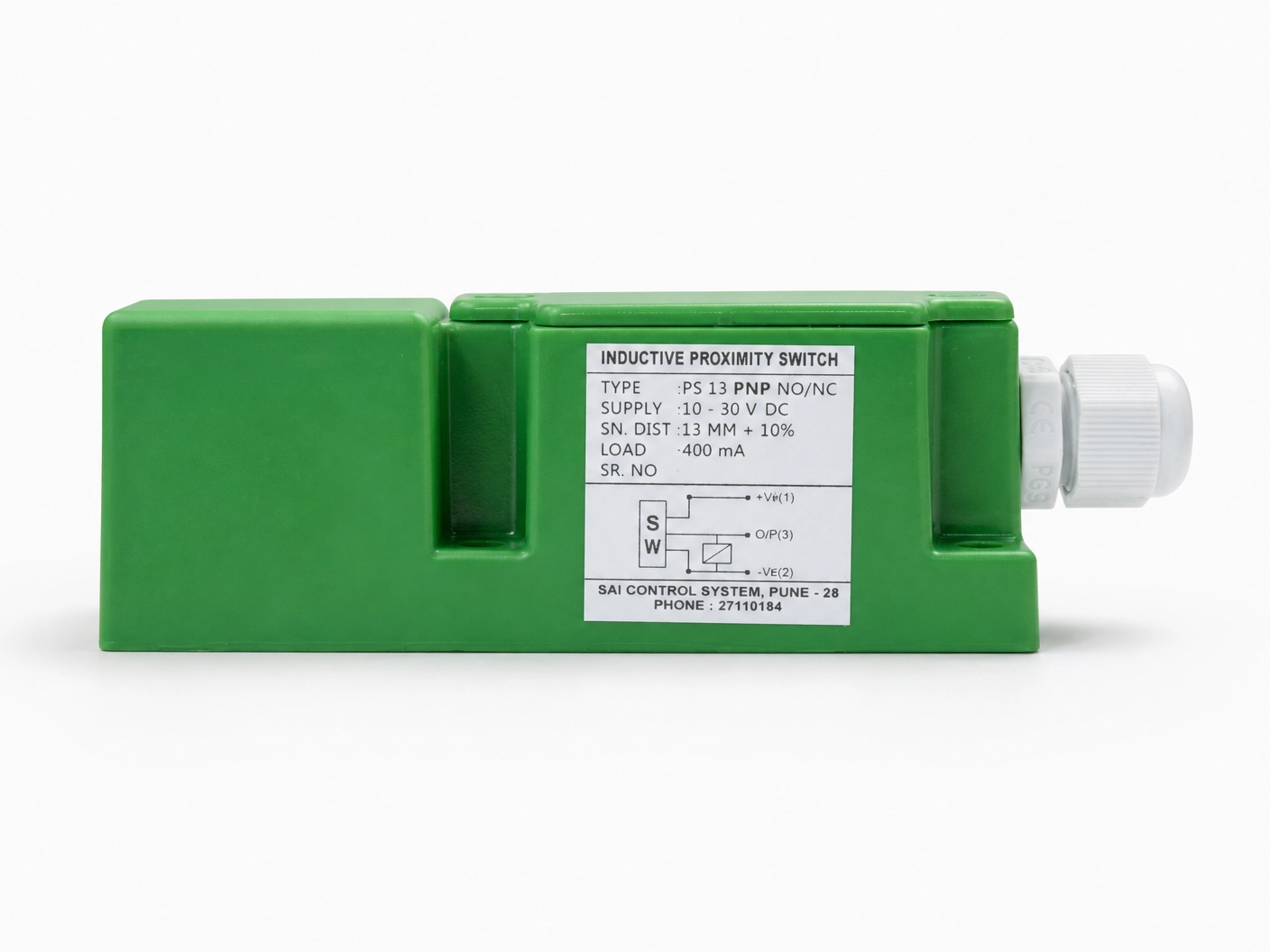 | Inductive Proximity Sensor Model: IPS13PNODF40 Size : 40*40*112mm Logic : PNP NO Sensing Distance : 15mm Sensing Face : Front Connection : PG Gland View product → |
Frequently asked questions
What does an inductive proximity sensor actually measure?
It detects a conductive metal target entering its electromagnetic field. A metal flag can provide a target when the product itself is plastic, wood, powder, grain, or liquid.
When should you choose an RF admittance level switch?
Choose an RF admittance level switch for point-level detection in bins, hoppers, and silos when the stored material forms a measurable change in electrical admittance around the probe.
Which sensor fits conveyors and machines?
An inductive proximity sensor fits conveyor position, machine sequencing, metal-part detection, and end-of-travel applications. An RF admittance switch fits material high-level or low-level detection in vessels.
What should Pune buyers test before commissioning?
Test the actual material, probe position, switching point, false-trigger behaviour, buildup response, temperature rating, wiring, and output compatibility under plant conditions.
Related product
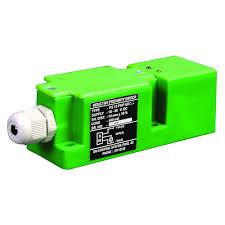 | Inductive Proximity Sensor Square Type Inductive Proximity Sensor The Square Type Inductive Proximity Sensor from Sai Control Systems is a high-performance, non-contact sensor designed for efficient and reliable... View product → |