A longitudinal belt tear can destroy a conveyor before an ordinary misalignment or emergency pull-cord device detects the problem. You will be able to identify the correct detection principle, compare protection methods, prepare a complete Pune supplier RFQ, and verify the installed safety circuit before ordering.
Key takeaways
- Use a rupture switch for longitudinal belt tears, not belt sway or belt slip.
- Place sensing elements beside likely tear paths without restricting normal belt movement.
- Demand fail-safe contacts, reset details, test records, and the switching diagram.
- Interlock the switch with conveyor shutdown and verify the complete stop sequence.
What a belt rupture tear switch detects and how it stops a conveyor
A belt rupture tear switch detects a longitudinal slit or rip when the damaged belt contacts, lifts, or displaces a sensing element beside the belt edge or return path. It is not a belt sway, belt-slip, zero-speed, or emergency-stop device.
The shutdown sequence is direct:
- The torn belt changes the sensor’s switch state.
- A control circuit, safety relay, or safety PLC receives the signal.
- The conveyor drive stops and the fault remains latched for inspection and reset.
- A deliberate reset must be followed by a separate start command.
The switch does not repair, contain, or support a torn belt. A pull-cord switch responds when an operator pulls a rope; it cannot reliably detect a slit that has not reached the cable path.
| Device | Detects | Does not replace |
|---|---|---|
| Belt rupture switch | Belt contact with a local sensing element | Belt sway protection |
| Belt sway switch | Lateral belt movement | Belt-rip detection |
| Speed or zero-speed switch | Insufficient pulley or belt motion | Tear sensing |
| Pull-cord emergency stop | A person pulling the rope | Automatic belt-rip detection |
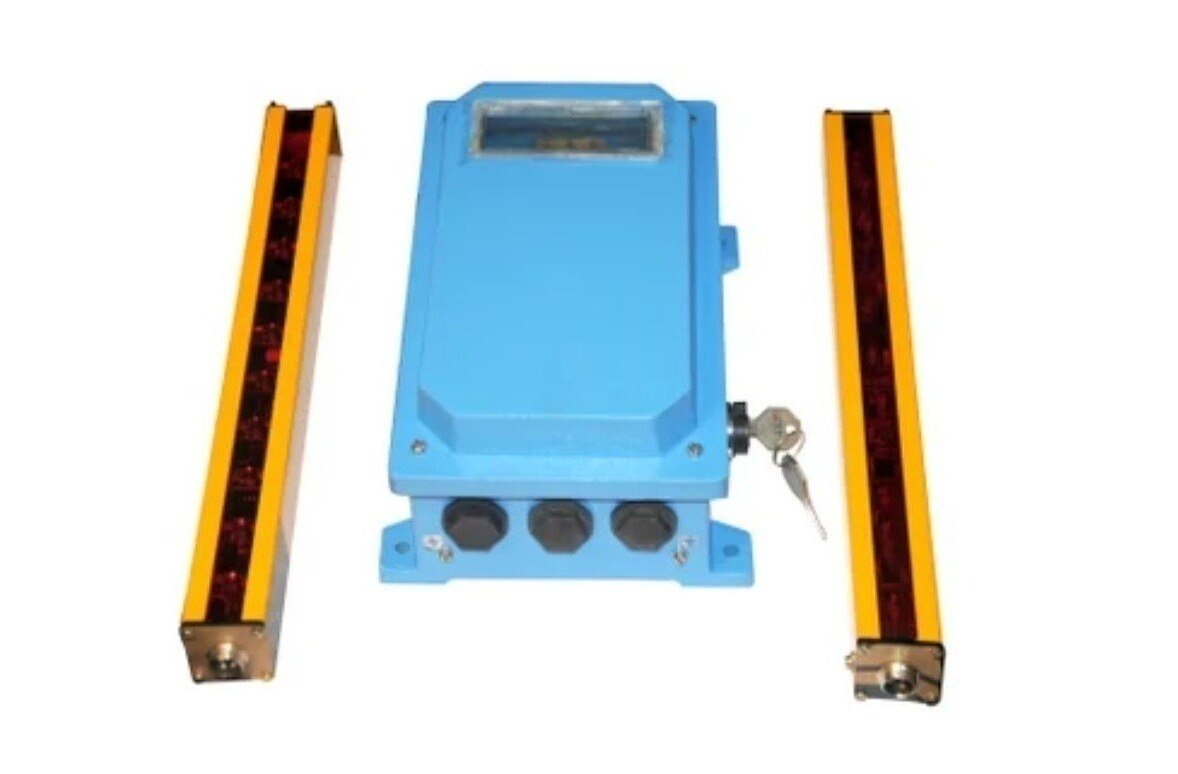
| Dedicated belt-rip system | Tear through loops, conductive elements, magnetic markers, optical sensing, or a belt-mounted transmitter | Every other safeguard |
For conveyor belt rupture protection in Pune, require the detection principle in the quotation. “Belt rupture switch,” “belt tear switch,” and “belt rip detector” can describe different technologies.
A belt rupture tear switch or belt rupture switch supplier in Pune should identify the sensing method, detection threshold, and reset arrangement rather than quote only the word “rupture.”
Which conveyor protection device matches each failure mode
Match the device to the failure, because no single switch provides every protective function. This belt rupture tear switch comparison is central to conveyor belt rupture protection in Pune: a tear sensor responds to belt damage, while other devices address movement, speed, traction, or human intervention.
| Device | Detects | Correct application |
|---|---|---|
| Tear switch | Belt contacts, lifts, or displaces a local sensing element | Local response to a longitudinal tear |
| Belt sway switch | Lateral belt movement | Misalignment before the belt contacts structure |
| Speed or zero-speed switch | Insufficient pulley or belt motion | Stalled or stopped conveyor |
| Belt-slip monitor | Speed difference or loss of traction | Slippage between belt and drive pulley |
| Pull-cord emergency stop | A person pulling the rope | Emergency stopping along the conveyor |
| Dedicated belt-rip system | Tear through loops, conductive elements, magnetic markers, optical sensing, or a transmitter | Early longitudinal-rip detection |
A conventional pull-wire circuit cannot reliably detect a slit that has not reached the cable path. Specify the detection principle; “rupture switch,” “tear switch,” and “rip detector” are not interchangeable. ISO 13850 treats emergency stop as protection that supplements other safeguarding, not as a replacement for it.
Reset logic matters after any trip. Local manual reset keeps the person who cleared the fault closer to the conveyor; remote reset needs clear danger-zone visibility and interlocking. Require a deliberate reset followed by a separate start command, so resetting a tear, rip, or pull-cord device cannot restart the conveyor.
Where to place sensors and what to check on the conveyor
Inspect both belt edges and the return path for points where a longitudinal tear could contact, lift, or displace a sensing element. Check whether protection is required on the left side, right side, or both; never assume spacing or orientation without the manufacturer’s drawing.
1. Measure clearance around loading chutes, transfer points, skirt boards, scrapers, idlers, belt cleaners, splices, and structural members. Normal belt movement, belt vibration, material flow, or a splice passing the sensor must not create false trips.
2. Record the belt width, speed, conveyor direction, construction, steel-cord or textile carcass, chevron profile, splice regions, mounting orientation, and available clearance. Include ambient temperature, abrasive dust, monsoon moisture, chemical washdown, and hazardous-area classification.
3. Ask a belt tear switch supplier in Pune and a belt rupture switch supplier in Pune to state the minimum detectable tear length, response time, permissible belt speed, and whether detection works in both belt directions when required.
A quotation is incomplete without these measurements. Steel-cord, textile, and chevron belts can require different sensing arrangements, while belt cleaners and skirt boards can obstruct installation or damage exposed mechanisms. Confirm the detection principle and obtain the model-specific mounting drawing before choosing a device.
What to demand from a belt rupture switch supplier in Pune
Put the quotation request in writing so every belt rupture switch supplier in Pune prices the same application. State conveyor length and width, belt speed, belt construction, cord type, material and transfer-point geometry, control voltage, cable-routing distance, required stop category, and minimum detectable tear.
Ask each supplier to provide:
- Contact rating; NO and NC arrangement; rated insulation voltage; impulse withstand value; IP code to IEC 60529; operating force or displacement; latching behaviour; reset method; body material; terminal arrangement; cable-entry size; cable-gland specification; and control-voltage requirements.
- Enclosure resistance data for abrasive dust, impact, ultraviolet exposure, corrosion, chemical washdown, and monsoon moisture. IP65 or IP67 does not prove resistance to every site hazard.
- The intended connection: direct contactor control, safety relay, or safety PLC. Request Performance Level or Safety Integrity Level data for the complete safety-related control function, not the switch alone.
- A model drawing showing the belt-compatible sensing element, mounting clearances, detection threshold, belt-speed range, and replacement cost.
Use this comparison matrix rather than comparing price alone:
| Option | Strength to compare | Disqualifying gap |
|---|---|---|
| Local mechanical sensor | False-trip resistance and belt-speed range | No defined tear detection threshold |
| Belt-rip system | Sensing-loop or marker coverage and element cost | No evidence for the specified belt construction |
| Pull-cord switch | Broken-wire or lost-power fail-safe behaviour | Quoted as belt-rip detection without proof |
Compare temperature range, hazardous-area certification, spare availability, reset behaviour, and restart inhibition. A belt rupture tear switch or belt rupture switch supplier in Pune, including SAI CONTROL SYSTEM, should issue a model-specific quotation after reviewing these conveyor details.
Related product
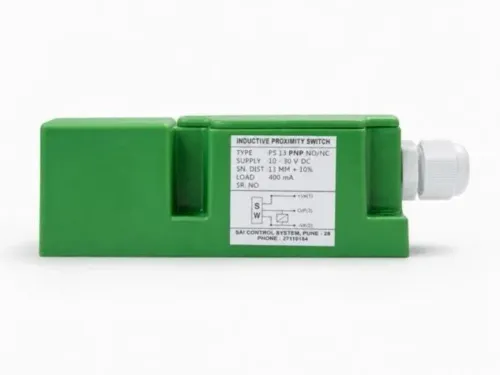
 | Pull Cord Switch Catering to the diverse demands of our clients, our organization is offering a quality range of Belt Rupture Tear Switch. View product → |
How to commission, test, reset, and interlock the protection
A supplier comparison for conveyor belt rupture protection in Pune is incomplete without a written commissioning procedure. Use this belt rupture tear switch comparison to test the installed function, not merely the model number or wiring diagram.
1. Apply lockout/tagout before inspection, mechanical testing, sensor adjustment, or reset work. Record the identification and location of every device; a visual check does not prove safe operation.
2. Actuate each switch and the actual belt-rip sensing element. Test the specified tear using the embedded loop, sensing antenna, magnetic marker, optical arrangement, or mechanical element fitted to the conveyor. A continuity test alone proves only circuit continuity.
3. Open the cable or create slack where the design includes cable-break detection. Confirm that the device latches, the PLC receives the correct indication, and the safety circuit isolates the motor.
4. Check emergency-stop contacts separately from auxiliary indication contacts. Verify the normally closed safety contacts, contact rating, motor-contactor interface, and stopping performance; a small PLC input rating does not qualify for direct motor switching.
5. Restore the device only through a deliberate manual reset, then issue a separate start command. Test restart inhibition so resetting a trip cannot start the conveyor.
6. Interlock the vibratory feeder controller with the receiving conveyor, rupture protection, pull-wire circuit, and downstream permissives. Feeder amplitude or speed control regulates material flow; it is not an emergency-stop function.
Frequently asked questions
What does a belt rupture tear switch detect?
It detects a longitudinal slit or rip when the damaged belt contacts, lifts, or displaces a sensing element beside the belt edge or return path.
Which device should you use for belt sway, belt slip, or an emergency stop?
Use belt-sway switches for belt misalignment, zero-speed or belt-slip switches for loss of movement, and emergency-stop pull-cord switches for manual emergency shutdown. A rupture switch is for longitudinal belt damage.
Where should you place a belt rupture switch?
Position the sensing element beside the belt edge or return path where a longitudinal tear will contact or displace it, then check clearance through loading, splicing, tracking, cleaning, and normal belt movement.
What should you ask a belt rupture switch supplier in Pune for?
Ask for the switching diagram, contact ratings, enclosure and environmental details, reset method, mounting dimensions, test procedure, installation limits, and documentation for commissioning and periodic testing.