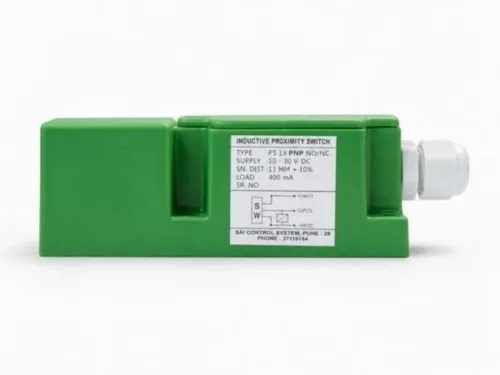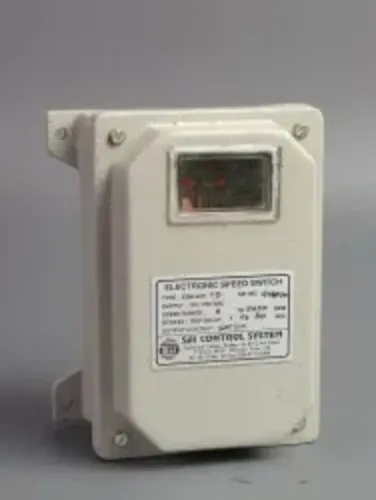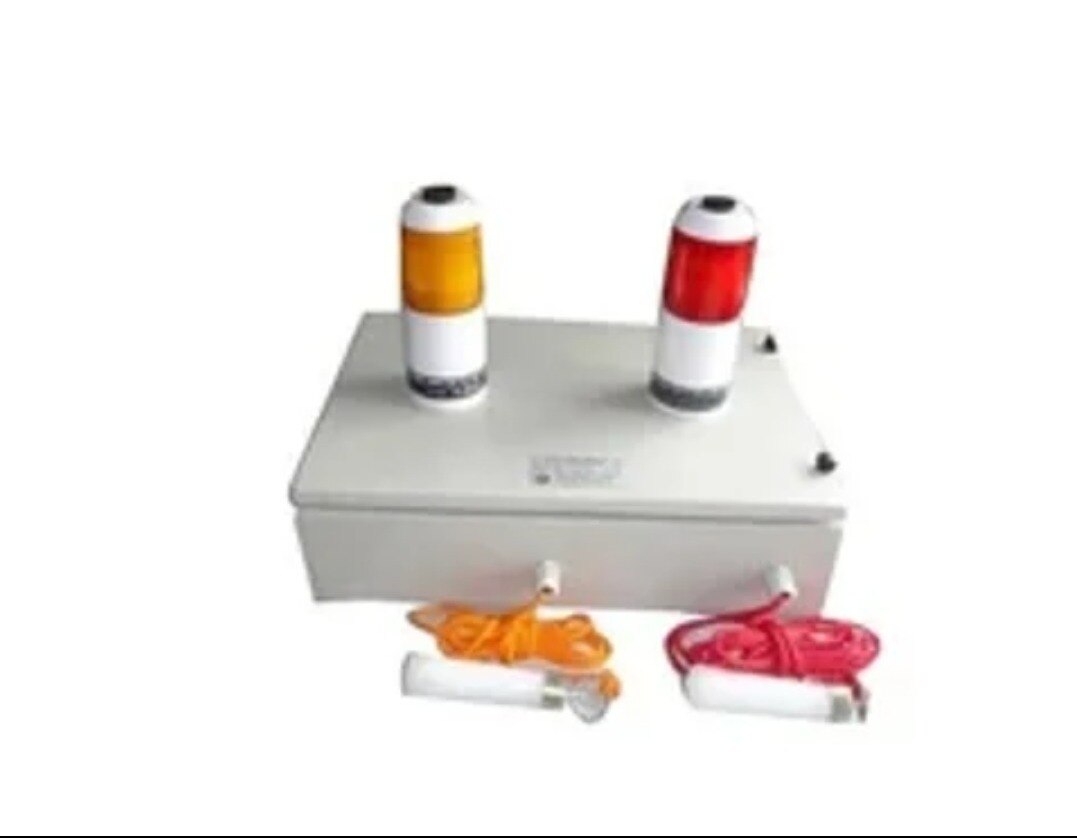
Choosing these devices requires more than matching a product name to a conveyor drawing. You need to verify what the lamp indicates, how the emergency circuit resets, where rope coverage ends, and whether the light curtain’s resolution and safety distance match the machine risk. By the end, you will have a practical specification for comparing Pune suppliers and requesting a technically complete quotation.
Key takeaways
- State the lamp function and voltage, such as 24 V DC or 230 V AC.
- Position pull-cord switches so workers can reach them from every conveyor point.
- Compare rope length, contacts, reset type, ingress rating and operating temperature.
- Give suppliers conveyor dimensions, hazards, required safety level and wiring details.
What the illuminated pull-cord switch does during a conveyor emergency
1. During normal operation, the lamp may indicate supply present, a healthy safety circuit, or reset-ready status. Do not guess: the quotation must state the exact lamp meaning and voltage, such as 24 V DC or 230 V AC. Confirm whether the lamp has a separate supply or shares the safety-control supply.
2. Pulling the rope must open the safety-rated normally closed emergency-stop contacts, latch the switch, and stop the conveyor. The lamp may change to tripped or reset-required status, but it is only an indication; a failed lamp must not defeat the safety contacts.
Ask for the auxiliary-contact function, AC or DC contact rating, cable-entry size, and terminal arrangement.
3. Reset the latched switch deliberately at its local reset mechanism after clearing the hazard. Resetting must restore the circuit only; it must never restart the conveyor. The control system must require a separate start command.
4. Do not substitute this device for another sensor. A belt sway switch detects alignment, while a belt rupture or tear switch detects belt damage. A local stop pushbutton protects one station, and an emergency-stop mushroom button protects its mounting point. The pull cord provides accessible emergency actuation along a conveyor zone.
5. If you request a pull cord switch with lamp indication in pune, specify the lamp state, voltage, wiring, and reset method. A pull cord switch supplier in pune should provide the current datasheet and wiring diagram, not merely a product photograph.
How to position pull-cord switches along a conveyor
1. Do not assign one switch to a fixed number of metres. Begin with the machinery risk assessment and map every hazardous approach point, transfer, walkway, loading area, maintenance access, and section hidden behind guarding. Position the rope so an operator can reach it from the relevant side without entering the hazard.
2. Ask a pull cord switch supplier in Pune for the manufacturer’s maximum rope span, allowable pull force, cord travel, tension range, end hardware, tensioners, and broken- or slack-rope detection data. Use these limits to develop an installation drawing, not a fixed metres-per-switch promise.
3. Account for sag, temperature-related expansion, vibration, conveyor bends, changes in elevation, and inaccessible sections. A straight rope run may need separate switch arrangements at a bend because the cord must actuate each mechanism reliably in the intended direction. Show switch locations, rope routes, and reset points on the conveyor safety drawing.
4. Commission every installed section before handover. Test the farthest pull point, every span, both pull directions where applicable, slack- and broken-rope detection, latch retention, manual reset, and the no-automatic-restart condition. Record failed tests and correct them before the conveyor enters service.
Which specifications decide whether a pull-cord switch is suitable
Suitability depends on the switch’s operating data and circuit interface, not cast-iron construction or an IP65 label. Use this comparison checklist for a pull cord switch with lamp indication in Pune:
| Requirement | What to verify | Failure if missed |
|---|---|---|
| Mechanical action | Pull force, cord travel, maximum span, latching behaviour, reset type, rope-entry sealing | The rope may not trip the switch or detect slackness |
| Safety function | Safety-contact arrangement, auxiliary contacts, contact category or emergency-stop circuit category, mechanical life, vibration tolerance, ambient temperature | The device may not suit the risk assessment or control circuit |
| Electrical interface | Voltage, AC or DC operation, contact current, normally open and normally closed contacts, terminal layout, cable-gland size, enclosure connection method | Wiring changes, nuisance trips, or unsafe bypasses |
| Environment | Material grade, corrosion tests, temperature limits, gland data, washdown evidence, hazardous-area certification | Water, dust, chemicals, heat, or corrosion can shorten service life |
| Lamp circuit | Lamp voltage, separate supply, extra conductors, junction-box arrangement, visibility in dust and normal lighting | The indication can be unreadable or miswired |
IP65 means protection against dust ingress and water jets. It does not prove impact resistance, ultraviolet resistance, chemical protection, long-term corrosion resistance, high-temperature operation, or explosive-atmosphere suitability.
For outdoor, washdown, abrasive-dust, corrosive, hot, or hazardous-area service, request the listed evidence before comparing quotations. A pull cord switch supplier in Pune should provide these documents rather than rely on the label alone.
How to specify the safety light curtain beside the conveyor
Specify the curtain by protected height, resolution, sensing range, response time, mounting arrangement, and risk—not by beam count alone. Resolution determines whether it detects a finger, hand, or body; protected height defines the vertical opening covered.
Use ISO 13855 to calculate safety distance. Include human approach speed, curtain response time, safety-relay or controller response time, measured machine stopping time, and the applicable intrusion-distance factor. A short distance can leave an operator inside the hazard before the conveyor stops.
| Type | What it indicates | Selection point |
|---|---|---|
| Type 2 | Lower-risk protective equipment | Use only when the risk assessment permits it |
| Type 4 | Equipment intended for higher-risk applications | Choose it when the risk assessment requires the higher category |
Neither label proves the final Performance Level or SIL. Wiring, logic, contactors, and final switching devices determine the complete safety-related control system.
Request these items from a safety light curtain supplier in Pune:
- Dual monitored OSSD outputs and a compatible safety relay or safety controller
- The required PL or SIL target for the complete system
- Reset and restart interlocking, with no automatic restart after beam interruption
- Muting, blanking, reduced-resolution modes, or automatic restart only with documented risk assessment and controlled enabling conditions
Do not wire the curtain only to an ordinary PLC input and call it a safety function. Verify the mounting brackets and alignment, then test the actual stopping distance after installation.
What to put in a Pune supplier RFQ before comparing quotations
A pull cord switch with lamp safety light curtain supplier in Pune should receive one RFQ with two separate safety functions, not a single line item. Include conveyor length, rope routes, bends, inaccessible sections, reset location, lamp meaning, control voltage, AC or DC supply, contact arrangement, and auxiliary contacts for the pull-cord circuit.
| Function | RFQ information | Supplier evidence |
|---|---|---|
| Pull-cord emergency stop | Rope layout, bends, inaccessible sections, reset location, lamp meaning, voltage, AC or DC supply, safety contacts, auxiliary contacts | Exact part number, datasheet, wiring diagram, installation drawing |
| Safety light curtain | OSSD requirements, protected height, finger, hand or body resolution, machine stopping time, Type 2 or Type 4 selection, target PL or SIL | Response and safety documentation, conformity evidence, connection diagram |
| Environment | IP requirement, dust, washdown, chemical exposure, UV, temperature, vibration, explosive-area conditions | Ratings, certificates and installation limits |
Ask the safety light curtain supplier in Pune and pull cord switch supplier in Pune for lead time, replacement availability, commissioning support, and a tested spare strategy. SAI CONTROL SYSTEM is worth comparing when it reviews the complete conveyor and machine interface instead of quoting an isolated switch or ordinary photoelectric sensor.
Keep a vibratory feeder controller outside the safety function. Specify supply voltage, feeder current, sensor type and polarity, control range, overload protection, electromagnetic-coil compatibility, and NPN/PNP matching. Compare documented technical evidence, not the word “supplier” alone.
Related products
 | Pull Cord Switch Pull Cord Switch With Lamp Indication The Pull Cord Switch with Lamp Indication is a premium-grade control switch designed to enhance safety and convenience in industrial and commercial... View product → |
 | Pull Cord Switch Sai Control Systems offers a reliable range of Pull Cord Switches and Belt Sway Switches, specifically engineered for conveyor safety in industrial... View product → |
Frequently asked questions
What does the lamp on an illuminated pull-cord switch indicate?
It can indicate supply present, a healthy safety circuit or reset-ready status. Specify the exact meaning, voltage and whether the lamp has a separate supply.
How should you position pull-cord switches along a conveyor?
Place switches where workers can reach the emergency rope along the conveyor, account for access routes and support the rope at intervals specified by the switch manufacturer.
Which specifications determine whether a pull-cord switch is suitable?
Check rope length, contact arrangement, latching and reset method, enclosure rating, operating temperature, mechanical life, cable entries and safety-circuit compatibility.
What should you specify for a safety light curtain beside a conveyor?
State the protected opening, sensing range, resolution, response time, safety performance requirement, approach direction, blanking needs, environmental conditions and reset arrangement.
What should a Pune supplier RFQ include before you compare quotations?
Include conveyor drawings, dimensions, hazard details, switch and light-curtain quantities, lamp voltage and function, wiring requirements, documents, delivery location and testing expectations.
Related products
 | Pull Cord Switch The 16A Pull Cord Switch is a robust and dependable switch designed to offer a convenient method for controlling electrical appliances. View product → |
 | Pull Cord Switch Catering to the diverse demands of our clients, our organization is offering a quality range of Belt Rupture Tear Switch. View product → |