A sway event can mean anything from a brief belt deviation to contact with the frame caused by a seized idler, off-centre loading, material buildup, or structural movement. You will learn when a belt misalignment sensor can confirm continuing danger, what to inspect before resetting, and when the real remedy lies elsewhere in the conveyor.
Key takeaways
- A sensor confirms belt displacement, not the cause of the sway event.
- Inspect belt tracking, pulleys, structure, splices and debris before resetting switches.
- Place switches where the belt can reach them before structural damage occurs.
- Use the switch as a warning unless the underlying tracking fault is repaired.
What a Belt Misalignment Sensor Can Confirm After the Event
Yes. A belt misalignment sensor can confirm that the belt remains far enough off-centre to actuate its roller or arm after the event. It cannot confirm that the original fault is repaired.
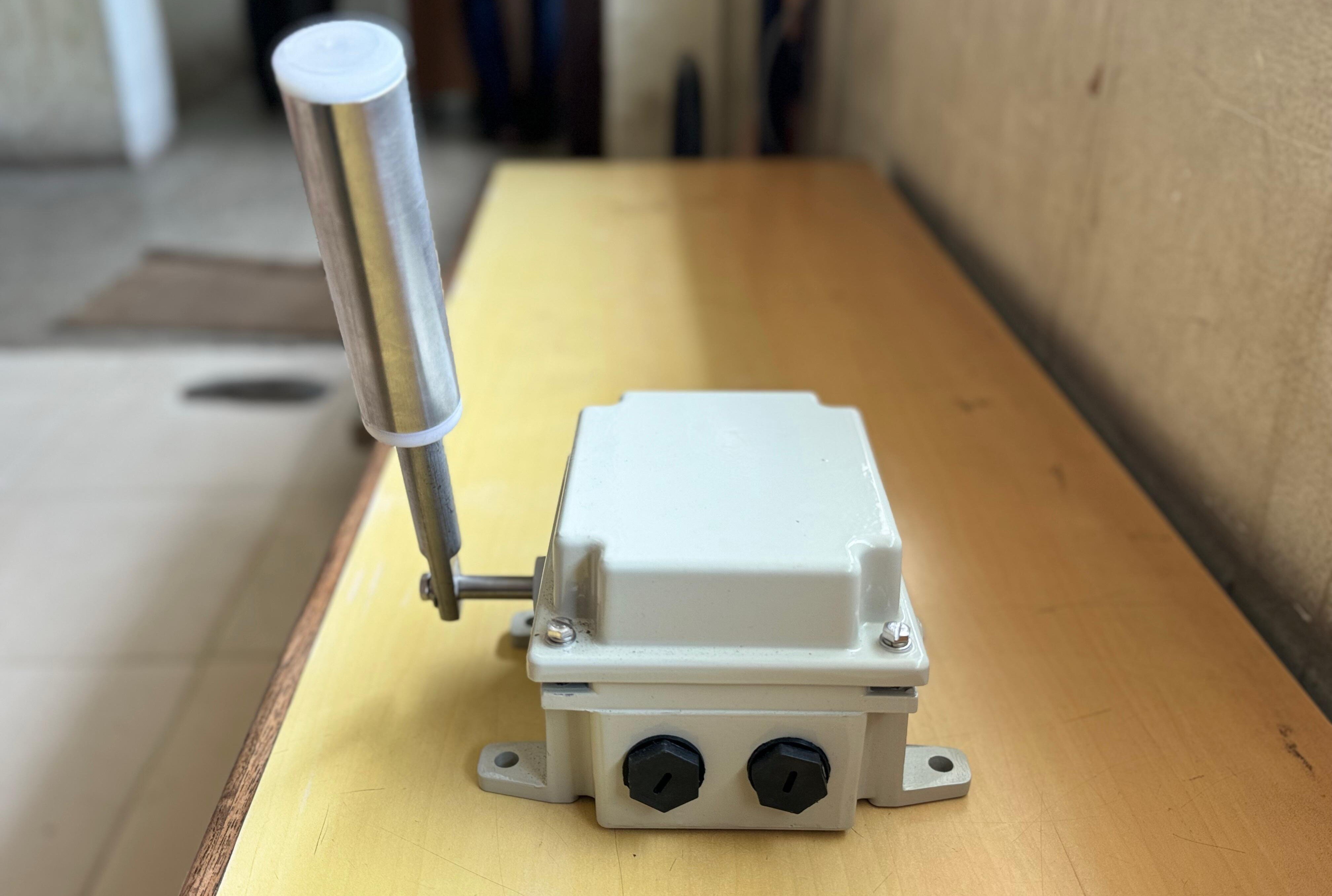
A belt misalignment sensor is normally a point detector with a preset lateral threshold, not a continuous position-measuring instrument. Its switch signal usually tells the PLC that the belt has reached the sensing point; it does not report the belt’s exact offset, drift direction, or drift rate.
After a belt misalignment sensor after a sway event in Mumbai operates, interpret the signal this way:
- A continuing trip confirms ongoing belt displacement, not the cause.
- A cleared trip confirms only that the belt moved away from the actuator.
- A trip does not straighten the belt, repair a splice, or prove that the conveyor is safe to restart.
- Belt-edge contact, carryback on the roller, a bent actuator, loose mounting, wrong roller clearance, or genuine off-centre running can all produce the signal.
Do not configure the switch to restart the conveyor automatically when the belt returns to centre. Require inspection, acknowledgement, and a verified restart permissive in the control system.
If you need an alarm, shutdown, or continuous drift measurement, specify that function separately; a belt sway switch cannot replace tracking checks, training hardware, or a zero-speed, tear-detection, pull-cord, or emergency-stop circuit.
Inspect and Test the Conveyor Before You Reset It
Do not reset the conveyor because the belt has returned to the centre. A belt sway switch confirms only that the belt is still displaced when its actuator is engaged; it does not straighten the belt or prove that the original fault is gone.
Isolate the conveyor under OSHA lockout/tagout before entering the belt line or reaching any component. A local stop button is not energy isolation.
- Inspect both belt edges, the splice, and any fresh rubbing, cuts, fraying, or lifted fasteners. Check whether the belt has shifted permanently.
- Examine idlers and pulleys for seizure, damaged bearings, buildup, skew, or seized shafts. Remove carryback from rotating parts and the return path.
- Check the loading chute centre, skirt rubber, and structure for material impact, movement, loose bolts, or distortion. Correct anything that can push the belt sideways.
- Inspect each belt sway switch for a bent roller or lever, loose mounting, damaged cable, poor alignment, and a blocked actuator.
- After maintenance, function-test every switch from both sides of the belt. Confirm the alarm threshold, shutdown threshold, PLC indication, motor-stopping response, open-circuit or fault indication, manual reset, and prevention of unintended restart.
Reset the trip only after the cause and damage are addressed. Verify that the control system requires acknowledgement or manual reset and that the restart permissive is clear. Test the complete safety chain—switch contacts, wiring, input module, logic, output device, reset, and fault monitoring—against the risk-based performance requirement; the switch alone does not establish it.
Choose the Detection Point, Device Type and Number of Switches
A switch placed 20 metres downstream from a hazardous loading point may detect belt sway too late. Place the detection point where the belt still has enough travel distance for the complete stop: belt speed multiplied by switch actuation time, control-system delay, motor or brake stopping time, and any output-device delay.
Set the first threshold for an alarm or controlled intervention and the second for shutdown when the site requires two-stage protection. Do not assume a universal trip angle or lateral distance; confirm each device’s adjustable range and the belt’s safe clearance from the frame, idlers and chute.
Determine the arrangement from the hazard study and conveyor geometry:
- Select a belt sway switch for a discrete alarm or trip, not for continuous drift measurement.
- Install one switch on each belt side when movement in either direction can damage the belt or structure.
- Add detection points along the conveyor when a single location cannot cover loading zones, transfer points or long travel distances before stopping.
- Assess the entire belt conveyor safety switches circuit, including contacts, wiring, input module, logic, outputs, reset and fault monitoring, against the required performance level.
| Device | Signal | Choose it when |
|---|---|---|
| Belt sway switch | Preset lateral trip | You need alarm or shutdown after drift |
| Continuous belt drift monitor | Position, direction or rate | The control system must track developing movement |
| Pull-cord switch | Manual emergency stop | A person must stop the conveyor from its length |
A sway switch alone cannot establish safety performance or prove the cause is corrected.
Specify and Retrofit the Switch for the Actual Site
Confirm the switch against the conveyor’s actual belt speed, width, travel direction and stopping distance. A belt misalignment sensor after a sway event in Mumbai also needs protection against monsoon water, dust, carryback, vibration and corrosion.
1. Record the required function: alarm only, shutdown, or continuous drift measurement. A sway switch is a point detector; its roller or arm signals a preset lateral displacement but does not report drift distance, direction or rate to the PLC.
2. Specify the operating details: belt speed, allowable offset, actuation angle, contact arrangement, control voltage, current rating, reset method, enclosure protection and ambient temperature. Confirm whether the area requires an approved hazardous-location device.
3. Check the site before drilling. Inspect the belt edge, splice, idlers, pulleys, loading chute, skirt rubber, structure and carryback. Mount the switch on rigid steel, outside the material stream, where the belt can contact the roller without striking the housing.
4. Calculate detection-to-stop distance from belt speed, switch actuation time, control-system delay and motor or brake stopping time. Place the switch early enough to prevent damage, then route protected cable to the safety circuit.
5. Verify that the complete chain—contacts, wiring, input module, logic, output device and reset—meets the risk assessment. Require manual acknowledgement after a trip; do not permit automatic restart when the belt recentres.
Before selecting among belt conveyor safety switches, give SAI CONTROL SYSTEM the drawings, control voltage, site photographs and measured clearances so the replacement matches the installation rather than merely the catalogue description.
Related products
 | Pull Cord Switch Sai Control Systems offers a reliable range of Pull Cord Switches and Belt Sway Switches, specifically engineered for conveyor safety in industrial... View product → |
 | Pull Cord Switch Catering to the diverse demands of our clients, our organization is offering a quality range of Belt Rupture Tear Switch. View product → |
Decide Whether the Switch Is the Remedy or Only the Warning
A sway trip is a warning until inspection identifies the cause. Replace the switch when it has cracked housing, bent roller, damaged contacts, failed insulation, water ingress, unreliable switching, or a mounting position that cannot hold its specified setting.
- Correct the conveyor fault when the belt keeps drifting after the switch passes its test. Check pulley and idler alignment, unequal tension, seized idlers, off-centre loading, belt-edge damage, a poor splice, material buildup, structural movement, and skirt interference. Repositioning the switch alone can hide the defect and leave the belt at risk.
- Keep the switch when it detects the intended movement, but repair the fault elsewhere. Set the control circuit to alarm, controlled intervention, or shutdown according to the risk assessment; do not assume one device performs all three functions.
- Choose another device when the hazard is different. A pull-cord switch covers emergency stopping along the conveyor, a tear switch detects belt rupture, a zero-speed switch detects loss of motion, and a continuous belt drift monitor measures position rather than providing a simple trip.
A belt misalignment sensor cannot prove that the original cause is fixed. After testing, require acknowledgement or a manual reset; never permit automatic restart merely because the belt returns to centre.
Belt conveyor safety switches also do not establish safety performance alone: actuator, contacts, wiring, logic, outputs, reset, and fault monitoring form the complete protective chain.
Frequently asked questions
What can a belt misalignment sensor confirm after a sway event?
It can confirm that the belt remains far enough off-centre to actuate its roller or arm. It cannot confirm that the original fault is repaired.
What should you inspect before resetting a belt sway switch?
Inspect belt tracking, pulleys, idlers, splices, conveyor structure, material buildup and switch operation before resetting the system.
How do you choose the detection point and number of belt conveyor safety switches?
Choose locations where belt movement becomes hazardous, then select the device type and number of switches needed to detect sway along the conveyor.
Is a belt misalignment sensor the remedy for a sway event?
The switch is a warning and protective input. Realign or repair the conveyor when the inspection identifies a tracking, loading, structural or mechanical fault.